FactGrid Goes NFDI

Friday week before last, we received the news that so many working groups had been eagerly awaiting: the 4Memory consortium (of historical studies) will become part of the Nationale Forschungsdateninfrastruktur (NFDI), the German National Research Data infrastructure.

This is exciting news for FactGrid, just weeks before its fifth birthday. We will be acting as an official repository for historical data in the upcoming NFDI structure. German projects can now make a good case that FactGrid is the optimal platform for their data.
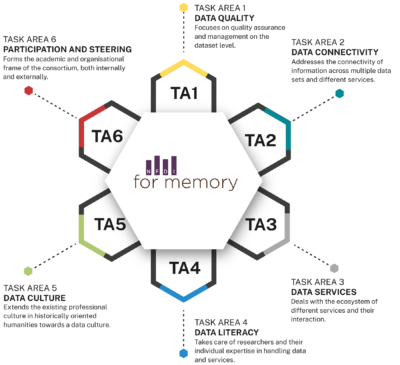
NFDI4Memory task areas

Changing the rules of our present research data management

The German National Research Data Infrastructure aims to bring transparency and sustainability to all research fields, from microbiology to computational linguistics. Whether researchers are still collecting data entirely for themselves in private Word documents and Excel spreadsheets, or whether they are working on digital platforms that are more or less designed like conventional books, designed to be read and looked at – they will face new questions in their research grant applications: Do they produce data? Do they correct publicly available data? If so, the new questions will be: How do they make sure that others can actually work with their data? The idea that new information ends in footnotes of books and articles will not convince the funding institutions any longer. A CSV or JSON data file located on a library server will not do either. Linked Open Data is the only data that is easily reusable – that is what Wikidata has made clear. New platforms are therefore needed – platforms approved by the National Research Data Infrastructure.

The DFG that pushed the process has acted wisely. The different research disciplines had to determine how they would respond to its call for action. They had to create or join umbrella organisations in order to submit proposals for further funding. NFDI4Culture was one of the first groups in the German humanities to receive funding; Text+, for all textual studies, was also among the first arrivals, in 2021. The historical studies collective founded the 4Memory consortium and received the green light in the second round on Friday 4th. Funding will start in March 2023. The Gotha Research Center the 4Memory “participant” on behalf of the FactGrid community in this process.

An international resource as part of a national infrastructure?

It took us a while to feel comfortable with the invitation to participate in this process – back in 2020. At that time we had created a little more than 100,000 items with a handful of participants. Wikimedia Germany was our natural partner. The German National Library was the first major player to collaborate with us in a joint exploration of the Wikibase software. FactGrid from the beginning had invited international collaboration, with projects from France, the United States, Spain, Hungary, and Switzerland. Could we risk a nationalisation of the platform?

The project partners on FactGrid were open to the idea: It would benefit everyone to take the step. The process would open doors to important discussions. We could discuss data standards used worldwide and be able to think of international alliances on this new stage.

Our asset? – Wikibase

Following the NFDI debates,we soon understood why we had been asked to join: We were using Wikibase, the software platform that all members of the nascent consortia were discussing behind the scenes as the very software that could build the bridges between the working groups.

  • Wikibase invites cooperation. Its data modelling is uniquely flexible.
  • Versioning of all editing processes enjoys unprecedented transparency.
  • Wikidata demonstrates that seemingly incompatible fields of knowledge can be managed together in a single graph database.
  • Getting data from a Wikibase platform is as easy as it is to put data into it.
  • Wikibase instances can be federated – we can diversify the scenery without using one single Wikibase instance.

FactGrid was ahead of its time. We were running a functional Wikibase platform while other groups were simply proposing to evaluate the option.

And yet still at the beginning

Over the last two years we have more than quadrupled to 457,000 items. FactGrid is doubling almost every year and there is no reason to believe that this will change in the near future. Projects that are presently preparing data uploads are in the scope of the entire current platform; with our upcoming projects we remain on a global trajectory – we are becoming more international, the platform is learning new languages.

The NFDI process comes just in time because, despite all that growth, we are still right at the beginning, and in urgent need of technological development, which is where we put the focus in our 2020 and 2021 grant proposals. We are not alone in this situation. Wikidata, our elder sister, is still in its initial phase – a peculiar statement, given the fact that Wikidata is celebrating its 10th birthday these days with more than 100 million database objects.

Wikidata is massive. It has rocked the library world as a revolutionary development, but despite that it is still an unknown giant hiding somewhere behind the Wikipedia curtain. Nobody has ever spoken of the data-technical Pentecost miracle which Wikidata actually is. The very name of the project has remained hidden: “Wikidata – you mean Wikipedia, don’t you?”

It is understandable that Wikidata has remained a virtually unknown child. There is neither a search tool leading a wider public to Wikidata information nor is this information readable once you have reached it. The SPARQL query service is a nightmare for normal users. Even if you know how to read computer code– which most of us do not–, how do you find out what information the database can supply? Right, by asking your first specific question with knowledge of the content (the very knowledge that you still do not have). One day an internet-savvy user contacted us with the note that our Query Service had crashed. The Query Service seemed fine; I suggested a video call to get an idea of what the man was seeing on his screen – and it turned out that he was looking at the regular search script. “Send it off, press that blue button!” – He did and received the requested data set. “Ah, I had seen this code stuff but thought it was an error message…”

Wikibase needs two enhancements: An attractive search interface as simple as the Google search box (though with an additional advanced search engine and a SPARQL-search option on top) and browsing software that generates information from the Wikibase or, better still, from several combined Wikibases. The present Wikibase query engine leads you right to the item-pages in the default Wikibase presentation mode, where you can then manually correct or amplify information, but no one seriously enjoys the reading experience. Magnus Manske’s Reasonator, Markus Krötzsch’s SQID, Michael Ringgaard’s KnolBrowser, and Bruno Belhoste’s FactGrid Viewer have shown how Wikibase information can be presented: in pages that present their information concise, well structured, fast to access and easy to exploit. So far, however, all four browsers have remained patchwork solutions. They do not amalgamate platform information in greater depth, and (this is the larger issue) they are as yet not coupled to intelligent search engines. The problem is that we have not yet arrived at independent new resources, at resources whose pages are Google landing points, with pages that amalgamate information from various Wikibases such as Wikidata and FactGrid, and that keep their users on the platform – providing in depth information on request, generating visualisations on the spot, offering downloads of information which users have been accumulating on their tour.

We will get multilingual and attractive Wikibase aggregates. They will integrate information from various resources and they will offer this information in any language requested, identical across all the cultural and political divides. The German NFDI will have to create prototypes of such instruments if they should actually federate Wikibases in a new broader research oriented structure, even if that should start as a national structure.

Opportunities and risks

“The General Intelligence Machine.” Art by H. Lanos for “When the Sleeper Wakes” by H. G. Wells (1899), Wikimedia Commons

The time for a broader research data infrastructure is ripe. Researchers are still handling “their” data on personal hard discs; they copy and paste dates from Wikipedia pages when they could have complete data sets ready to download. Data correction remains fortuitous. Do you write an email to the producers of an online catalogue which you have been accessing with the request to correct a mistake? Do you give the correct date in a footnote of your next article and expect librarians (and Wikipedians) to take note of your work? – We need online resources that allow researchers to correct mistakes right on the screen, in real time; and these resources should be the same ones, which users employ to organise their research. Wikibase is the software that can help to make this possible. How will we get there? Wikibases will have to become the go-to scholarly resources to consult; that is when they will turn into the workbench for the very projects that are using their data.

The landscape of NFDI-consortia comes with its own internal risks. We will need resources to do highly specialised jobs: resources to store and mine texts, resources for the machine readable information which we need in order to make 3D reproductions of objects, and we need resources for historical statements. FactGrid is focusing on this latter need. It cannot become the all-in-one service for historical research. We need the services of other consortia and we should offer our particular services to the other consortia wherever they handle historical statements.

The much more delicate risk of fragmentation looms on the international stage: Will the German expert on French history find herself asked to store her data on a German platform since her funding is German – while her French colleagues with whom she shares the research objects will be delivering their data into a French database? We could, of course, harvest information from 150 national research data infrastructures but that will not provide the same experience for those who generate the information. Working on FactGrid you are about to notice when a colleague in France or China adds to your data. You will contact the colleague with a note of delight about the archival sources that had escaped your notice. Wikibases are joint platforms and should be used as such.

The question of a plurality of national research data infrastructures becomes even more thorny as soon as we look beyond the privileged horizon. We need global platforms to provide equal access to research and to the debates surrounding research. Wikimedia has created Wikidata with the explicit aim of having a software compound on which users from all over the world can work together – accessing and expanding the same pool of global information. We, the international scientific community, the heirs of the international respublica litteraria, shouldn’t fall behind the Wikimedia project.

The fact that FactGrid, an explicitly internationally oriented resource, has entered the NFDI4Memory structure is an interesting development – a chance to get more than one National Research Infrastructure on board.

Links


Header image source: Robert Charles Dudley (British, 1826–1909) Interior of One of the Tanks on Board the Great Eastern: The [Transatlantic Cable] Cable Passing Out 1865/66, Watercolor over graphite with touches of gouache (bodycolor) https://www.metmuseum.org/art/collection/search/383834
The first volume of the Thuringian pastor’s book (1500–1920) as a Wikibase data set

auf Deutsch

In a tremendous effort of a year’s work, Heino Richard of the Genealogical Society of Thuringia e.V., step by step translated the first volume of the Thuringian Pastors’ Books (the volume for the former Duchy of Gotha) into data which we could now feed into FactGrid: More than 13,300 database objects are stemming from this work allowing now entirely new explorations of the territory’s social and religious history. We as curious about the joint ventures this work might inspire. There is no reason to fear that the database version will render all further work on the paper-based volumes obsolete; the platform might, however, offer itself to the editors of the Pfarrerbuch as an unexpected aid.

The eight volumes cover all the parishes of the former Thuringian territories from the Reformation to the 20th century. A first survey is opening each volume with a tour through all the parishes and offices giving the lists of the pastors and auxiliaries who held the respective offices. The main part is in each volume devoted to the individual biographies. Genealogy is key: Pastor after pastor we get the parents with their professions, their wives (with their respective parents and backgrounds), and eventually the children (with information about their professions and the families they married into).

“Things, not strings” – database objects instead of names to be merely spelled out

Translating the volumes into FactGrid-Wikibase data became an ordeal with software’s call for database objects to be connected – where the printed volume was just stating names in various strings of letters. One would have wished to get persistent identifiers with these names since almost all these names reappeared in various contexts – as office holders, as the targets of individual biographies and in various related functions as fathers, sons, sons-in-law or fathers-in-law in the other biographies – without any further clarification of the hard identities behind the mentionings. All this was tricky since names were passed across the whole range from fathers to son, or from grandfathers and uncles to grandsons and nephews to name the closer options that would become most difficult to set apart.

1953 church dignitaries became the stock to start with – almost all connected to more than one of the 142 parishes. The set doubled, tripled and quadrupled with the wives, parents and children and their new relatives to a total of 13,344 data records (as of today). All the records had to be connected to birth and death dates, places, information about marriages, terms of office and occupations.

The entire data is still flawed here and there – it will straighten out the the use it will find. A simple check sheds light into the abyss: We still have some 200 personal data records connected to more than one father and one mother. The double records have sprung unto existence wherever we failed to understand that people were the same – a given name missing or an alternative spelling would render the automatic identification impossible. Things are just as tricky where we supposed that we were dealing with a single person whilst we were actually fusing information of two different lives into a single data record.

Merging data sets remains as painful as the reversal since the software does not take much of an effort to keep track of all the consequences to observe when entire branches of families have been duplicated in the course of the input.

Software features one would love to have

The input of genealogical data calls for a module that understands what basically is. The module should generate family trees and warn you before any input that it has found identical family fingerprints: Children from two families are unlikely to share their birthdays; just as they are unlikely to marry into the same families or to share fathers with the same background data. When entering data, the software should highlight congruent structures and help to merge them with look at the entire overlap which it can track far better than any human eye.

The lack of the stand-alone frontend is even more grievous. Those who want to read the database are not interested in the input pages that list the various triples and qualifiers just as we happened to enter them.

Magnus Manke’s “Reasonator” and Markus Krötzsch’s “SQID” demonstrate what Wikidata and Wikibase should receive: an interface that is solely geared towards the display of data. The next generation of such interfaces will do more than just display the statements made on a single item in a better order. Configurable interfaces will gather information from items referring to your query. It is precarious to list 800 letters and publications of a person you are exploring on the person’s item, if you have already created 800 items for all these titles all with in-depth information on the authors, collaborators, publishers, performances, recipients, archival holdings and so on. It should suffice to note a person’s father and mother on the person’s item — once you start giving reciprocal information on the parents’ pages and siblings you are in the middle of a mess of data which you will inevitably fail to keep in congruence.

Lacking a more cohesive interface it remains difficult to present a data set like this one.

So how can one see what’s in it?

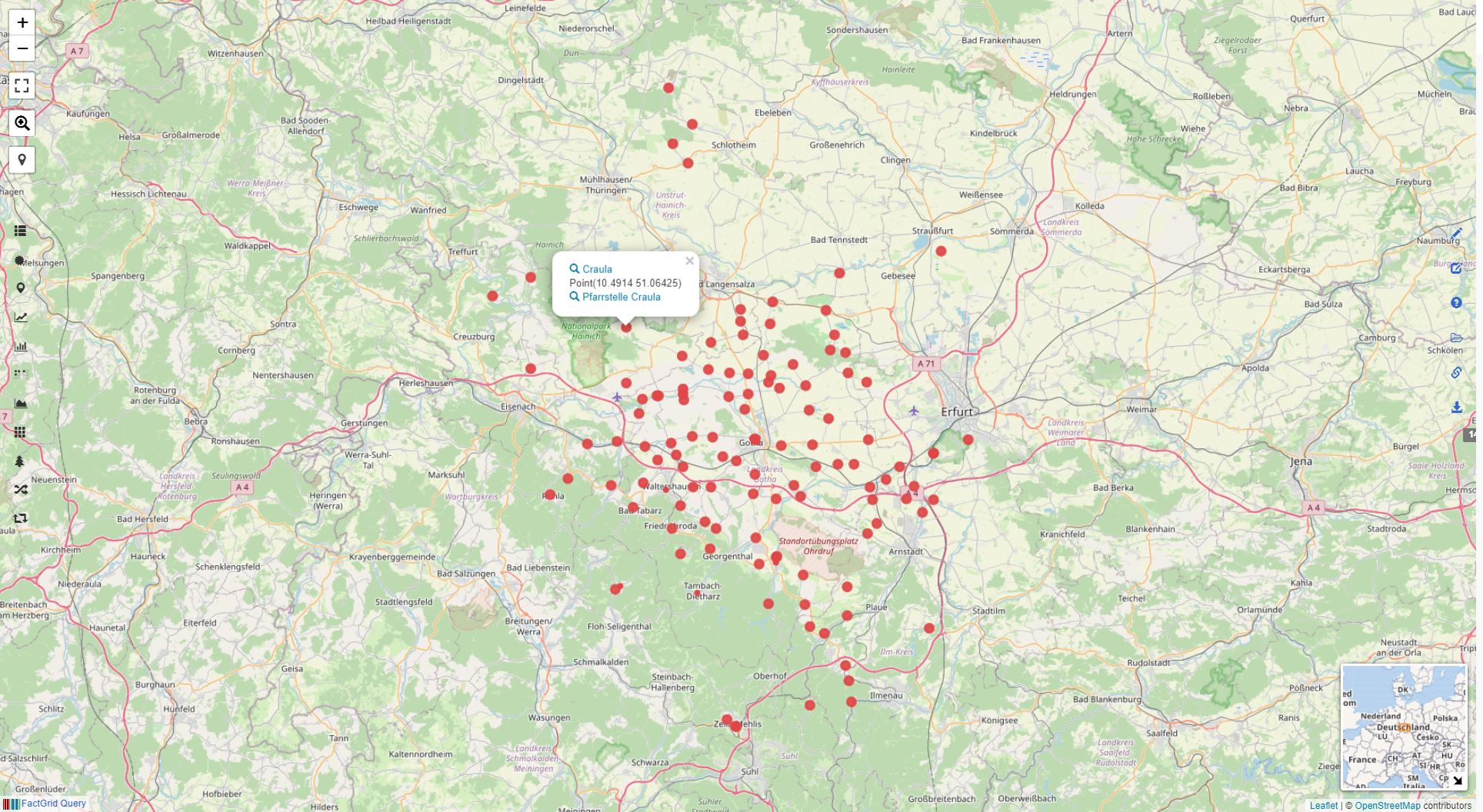
What we can do in the present situation is to give first searches that enable readers to start their own more specific searches – knowing that SPARQL will be a huge put off for the majority of readers. The most practical first search to start with will be the query for all the Protestant parishes of the former Duchy, to appear on a map:

Click the red dots to access to the records of the individual parishes with the lists of pastors registered on the each item.

The table version allows the data to be downloaded as JSON, TSV and CSV data records. TSV, “Table Separated Values”, can be processed in data sheets, whether Excel or Google. The search is sent off with the blue arrow key:

You will have to study an exemplary personal data record before you start your own searches as you need to know how we formulated the triples, i.e. the miniature statements stored in the database, in order to run effective searches as SPARQL queries:

The following query generates a table of all pastors with their birth dates, death dates and parents. With the input help (press the i-Icon to activate it) you can add more table columns to the search in order to get the additional information on children, wives, offices, memberships etc.:

All 13,484 database objects that are using information from the first volume of the Pastors’ Book can be bundled with the P12 (literature) + Q43361 (the first volume of the Thuringian Pastors’ Book) filter.

What is in it to learn?

The Thuringian Pastors’ Book genealogical focus opens up a first interesting perspective: Religion becomes after the territorial decisions of the Reformation increasingly a family institution: You take your religion with you as you receive it at birth. This is even more so with the church hierarchy that evolves. Families become the partners of the territorial churches supplying the students of theology and the pastors for generations. With the database we should become able to ask the more specific questions:

  • What was the exact influence of individual family positions: father, mother, grandfathers, uncles? How did that influence accumulate with more than one pastor in the family?
  • Did the family influence on becoming a pastor decrease over time – with the compulsory education becoming the central provider of professional decisions and career options in the course of the 19th century (and when exactly did such an influence become more noticeable)?
  • To what extent was marrying into a rectory household an advantage – for one’s own career, for the careers of the children?
  • Were local networks as valuable as relationships across spatial distances?
  • To what extent did the ecclesiastical appointments open – geographically? Where did the pastors come from over time?

A project looking for partners

We will have to bring people and institutions together to make our data sets more accessible and the CC0 license is not the threshold here.

(1) It would be an immense gain if could get Wikidata and Histropedia people on board. They are the people who understand the technical side far better than the FactGrid community of the historians; and somehow we should become able to work hands in hands.

(2) It would be a huge win if the resource attracted the team behind the Thuringian pastors books. The software we are using is not really a tool to digest books – it is a tool to facilitate your research. We have the ideal platform one would use to set identifiers and to collect and accumulate information – on the platform with the sources you will not be able to link in the volumes. FactGrid is a team’s tool to be used in the process that prepares a volume.

(3) We would be pleased if we could win the Eisenach State Church Archives for the project. For two years now we have been working with the Church Archive of the City of Gotha, which has started to use the database as its own repository. It would be exciting to widen this project an to get a clearer picture of the whereabouts of archival materials from the 142 parish we have been exploring with this project.

(4) A far broader data networking should add complexity and depth to the work done so far: Our 2000 pastors have written sermons, books, and letters. The Gotha Research Library will keep more of these publications than any other institution. We should be able to match our records to fuse the next layer of networking – the layer of public and private networking via letters and publications into the database with its present genealogical focus. The entire production of books and the links to digitisations is now increasingly done by the VD16, VD17 and VD18 online catalogues and the Kalliope-Database. It would be interesting to connect these records to allow the swift step from personal records to online documents. The Gotha Research Centre will not be able to organise such a projects – it will need partners who adopt the work we did here in a pilot study of the database’s potentials.

If you get interested in the data set and start exploring it, let us know and share your research with us right here on the blog.

Der erste Band des Thüringer Pfarrerbuchs (1500–1920) als Wikibase-Datensatz

English Version

In einer gewaltigen Arbeitsleistung überführte Heino Richard von der Arbeitsgemeinschaft Genealogie Thüringen e.V., Gothaer und Eisenacher Land, im letzten Jahr den ersten Band des Thüringischen Pfarrerbuchs, den Band für das ehemalige Herzogtum Gotha, in eine Version von über 13,300 Datenbankobjekten, die nun ganz neue Auswertungen erlaubt und die vielleicht damit interessante Kooperationen nahelegt. Dass das Datenbankangebot die weitere Arbeit an den Pfarrerbüchern erübrigen wird, steht nicht zu befürchten. Vielleicht aber wird sich das FactGrid den Bearbeitern der Bände als unerwartetes Hilfsmittel anbieten.

Die bisher erstellten acht Bände erfassen von der Reformation bis ins 20. Jahrhundert alle Pfarreien der ehemaligen Thüringer Territorien.

In einem ersten Part sind jeweils die Amtsinhaber nach Pfarreien chronologisch aufgelistet. Ihnen folgen im Hauptteil alphabetisch sortiert die eingehenden Biographien mit extensiven genealogischen Vernetzungen. Notiert werden jeweils die Eltern, die Ehefrauen mit Eltern und die Kinder, nochmals mit Hintergrundinformationen über Berufe, Ehepartner und deren Elternhäuser.

“Things, not Strings!” – Datenbankobjekte statt Namen in Buchstaben

Was in den acht Bänden nicht so schnell sichtbar wird, wurde in der Bearbeitung für das FactGrid zur harten Herausforderung: Wikibase will mit Datenbankobjekten, nicht mit schlichten Namen befüttert sein. Das Thüringer Pfarrerbuch liefert die Namen mit wechselnden Hintergründen (und immer wieder auch variierenden Schreibweisen), doch an keiner Stelle mit stabilen Identifikatoren; und so tauchen dieselben Person jederzeit für sich genommen und in verschiedensten Biogrammen als Väter, Söhne, Schwiegersöhne oder Schwiegerväter auf, ohne dass sogleich klar wird, wer da wer ist. Mit der Datenbankerfassung musste entschieden werden, wann jemand derselbe war – keine einfache Entscheidung, da Namen keine Eindeutigkeit schufen, familiär weitergegeben von Väter an Söhne wie zu Ehren näherer und fernerer Verwandter.

Das Datenvolumen lässt das Dickicht erahnen. Auf die 142 Pfarreien, die zwischen 1500 und 1920 im ehemaligen Territorium bestanden, kamen 1953 Personen als zeitweilige Amtsträger. Mit deren genealogischen Geflechten summiert sich der Personenbestand aktuell auf 13.344 Datensätze, die mit Eckdaten zu Geburt, Tod, Eheschluss und Kindergeburten, Amtszeiten und Berufen auszustatten waren.

Der gesamte Datenkomplex ist noch nicht vollständig konsolidiert. Ein Schlaglicht darauf werfen die Abfragen von Kindern und Eltern: Gut 200 Personendatensätze verfügen derzeit noch über mehr als einen Vater und eine Mutter – Doppelungen zu denen es kam, wenn wir versehentlich unter den Vätern oder Müttern Dubletten anlegten, Datensätze zur selben Person, da erst einmal nicht klar war, dass es sich um dieselbe Person handelte. In anderen Fällen haben Datensätze zwei Mütter oder Väter, da wir bislang verkannten, dass wir hier Biographien hätten trennen müssen – in sie flossen Eltern zweier gleichnamiger, nun zu trennender Personen ein.

Sowohl das Vereinen von Datensätzen wie das Auseinandernehmen sind Arbeiten, bei denen man schnell den Überblick verliert, da die Software nicht erfasst, wo ganze Äste gedoppelter oder zu trennende Information vorliegen und wie mit ihnen am besten zu verfahren ist.

Softwaredesiderate

Für die Eingabe genealogischer Daten wünschte man sich ein Modul, das versteht, was Verwandtschaftsbeziehungen ausmacht, und wie sie in der vorliegenden Datenbank notiert werden. Das Modul sollte Stammbäume generieren und noch im Eingabeprozess warnen, wenn sich familiäre Fingerabdrücke gleichen; es ist unwahrscheinlich, dass Kinder zweier Familien die Geburtstage oder Ehepartner miteinander teilen. Noch bei der Eingabe sollte die Software deckungsgleiche Strukturen aufscheinen lassen und aufzeigen, wie Äste von Information aufeinander zu legen sind.

Unbefriedigend ist bei alledem, dass wir in einer Software ohne stand-alone-Interface arbeiten. Magnus Mankes „Reasonator“ und Markus Krötzschs „SQID“ zeigten, was Wikidata und Wikibase bislang vor allem fehlt: die allein auf die Datennutzung ausgerichtete Oberfläche. Die weiterführende Technologie wird an selber Stelle viel mehr leisten müssen, als Daten aus einem jeweiligen Item besser geordnet wiederzugeben. Interessant werden konfigurierbare Oberflächen, die die Datenbank befragen, und die es erübrigen, Information in ihr gedoppelt abzulegen. Es ist prekär, im Datensatz zu einer Person, sagen wir, 800 Briefe und Publikationen der Person zu listen, wenn man bereits zu diesen 800 Objekten eigene Datensätze anlegte, die weitaus komplexer über Autoren, Beiträger, Adressaten, Verleger, Aufführungsorte, Aufbewahrungsorte, Werkausgaben, Digitalisierte, Transkripte, Übersetzungen und genannten Personen informieren. Im Moment legen wir Informationen doppelt und dreifach ab, allein um im Blick zu behalten, dass sie in der Datenbank vorliegen – mit allen Risiken dabei auseinander laufender Informationsstände.

In der misslichen Lage ist die hiermit vorgelegte Arbeit erst einmal fast nur für Datenfachleute klarer lesbar.

Erste Überblicke und Suchen

Die vielleicht praktischste erste Suche ist die aller protestantischen Pfarrämter des Herzogtums mit der Darstellung auf der Karte:

Jeder einzelne Punkt lässt sich anklicken und birgt den Zugriff auf die Datensätze der Pfarrämter und über diese auf die Amtsinhaber in ihrer jeweiligen Folge.

Die Tabellenversion erlaubt, es die Daten als JSON, TSV und CSV Datensätze herunterzulanden. “Table Separated Values” lassen sich in Datenblättern, ob Excel oder Google Sheets, weiterverarbeiten. Die Suche muss jeweils aktuell mit der blauen Pfeiltaste aktiviert werden:

Es empfiehlt sich, vor jeder weiteren Erkundung einen exemplarischen Personendatensatz zu studieren, um zu erfassen, welche Informationen von uns wie abgelegt wurden – es ist dies das Wissen, das bei jeder SPARQL-Abfrage zum Einsatz kommt:

Die folgende Anfrage generiert eine Tabelle aller Pfarrer mit deren Geburtsdaten, Sterbedaten und Eltern. Mit der Eingabehilfe (das i-Icon aktiviert sie) lassen sich beliebige weitere Tabellenspalten zu Kindern, Ehefrauen, Ämtern, Mitgliedschaften hinzusetzen:

Alle 13.484 Objekte, die den ersten Band des Pfarrerbuchs als Ressource nutzen, lassen jederzeit sich mit der Eingrenzung auf der Literaturangabe bündeln.

Inspiration

Der genealogische Schwerpunkt des Pfarrerbuchs eröffnet eine erste interessanteste Perspektive: Religion ist im protestantischen Raum, mehr als im katholischen, Familiensache. Die territoriale Organisation der religiösen Betreuung findet Pfarrfamilien als organisatorischen Partner. Mit der Datenbankerfassung sollten sich die die härteren Fragen stellen lassen:

  • Wie groß war der spezifische Einfluss von Familienpositionen: Vätern, Müttern, Großvätern, Onkeln?
  • Wie veränderte sich dieser Einfluss? Inwieweit schwand er im Prozess, in dem Bildung klarer eine Angelegenheit der Schulsysteme wurde, die Berufswege unabhängig vom Elternhaus zu ebnen suchen?
  • Inwiefern war die Einheirat in einen Pfarrhaushalt ein Vorteil – für die eigene Kariere, wie die der Kinder?
  • Waren räumlich nahe Vernetzungen gleich viel wert wie Beziehungen über räumliche Distanz hinweg?
  • In welchem Umfang öffnete sich die kirchliche Ämterbesetzung im Verlauf? Wo kamen die Pfarrer her, wie verlagerten sich Herkunftsschwerpunkte?

Projekt auf Partnersuche

Vor allem wird nun die Frage interessant, welche Benutzergruppen wir in Austausch miteinander bringen können.

(1) Ein immenser Gewinn wäre es, könnten wir Geschichtsinteressierte des Wikidata-Projektes und der Histropedia auf den für uns noch durchaus unhandlichen Datenschatz lenken. In beiden Bereichen halten sich die Nutzer auf, die die Technik erst einmal weit besser verstehen als die FactGrid-Community der derzeit etwas über 100 Historiker und Historikerinnen.

(2) Interessant wäre es, das nach wie vor am Thüringer Pfarrerbuchs arbeitende Team für das FactGrid zu gewinnen. Unsere Datenbank sollte sich vor allem als immenser Zettelkasten eignen, in dem sich Informationen ablegen und mit den jeweils aktuellen Quellenbelegen ausstatten lassen.

(3) Freuen würden wir uns, gelänge es uns, das Landeskirchenarchiv Eisenach näher an das Projekt zu binden. Seit gut zwei Jahren arbeiten wir mit dem Kirchenarchiv der Stadt Gotha zusammen, das seinen Aktenbestand im FactGrid verwaltet. Spannend wäre es, zu erfassen, welche Datenbestände aus allen 142 Pfarrämtern heute noch wo liegen. Es ist dies ein im Kirchenarchiv Eisenach soeben koordiniertes Projekt.

(4) Die breite Datenvernetzung wird die bis hierhin getane Arbeit mit Vielschichtigkeit ausstatten: Die von uns erfassten Personen schrieben Bücher und Briefe. Die Forschungsbibliothek Gotha wird von den Publikationen ihres Territoriums mehr als jede andere Institution aufbewahren. Wir sollten hier den wechselseitigen Informationsabgleich zu Wege bringen. Der Abgleich mit dem VD16, VD17 und VD18 und der Kalliope-Datenbestand würde es erlauben, die Datensammlung an die laufende Erschließung von Texten und Dokumenten anzuschließen. Zur genealogischen Vernetzung der Biogramme käme im selben Moment die Vernetzung der jeweiligen öffentlichen Interaktion und persönlichen Korrespondenz. Für die Forschung dürfte es attraktiv sein, mit den Datensätzen Zugriff auf die Digitalisate zu gewinnen, und zu den Personen Texte und Austausch unmittelbar verfügbar vorliegen zu haben.

Wir sind neugierig darauf, wie sich das vorgelegte Datenangebot entfalten wird, und laden dazu ein, Erkundungen der Datensätze noch hier im Blog mit uns zu teilen.

Further Reading

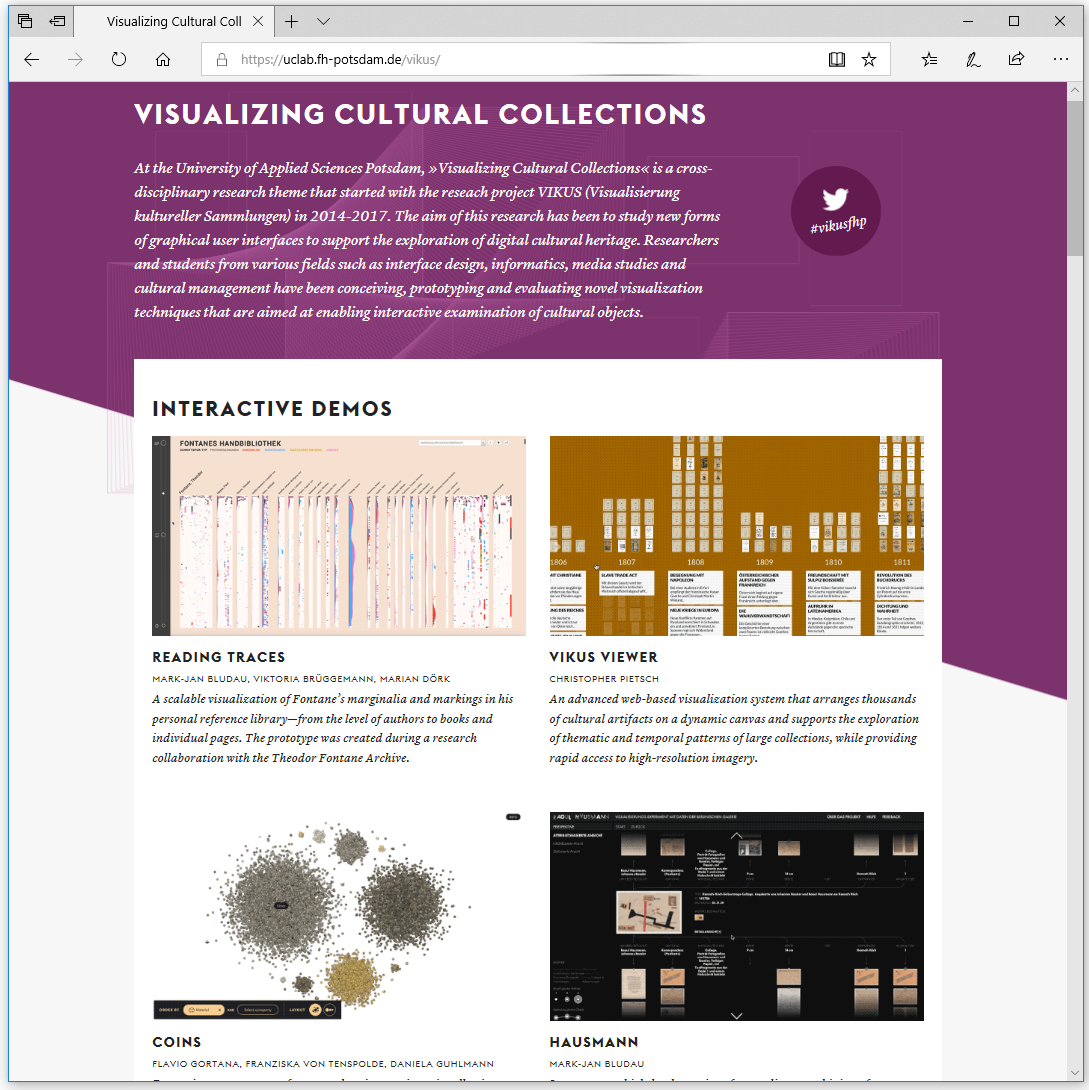
https://uclab.fh-potsdam.de/vikus/
VISUALIZING CULTURAL COLLECTIONS At the University of Applied Sciences Potsdam, »Visualizing Cultural Collections« is a cross-disciplinary research theme that started with the reseach project VIKUS (Visualisierung kultureller Sammlungen) in 2014-2017. The aim of this research has been to study new forms of graphical user interfaces to support the exploration of digital cultural heritage. Researchers and students from various fields such as interface design, informatics, media studies and cultural management have been conceiving, prototyping and evaluating novel visualization techniques that are aimed at enabling interactive examination of cultural objects.
more

As the last point makes it clear, the actual usefulness of the data comes with its use. Either in the form of services that are targeted at end users or by providing insights that are turned into stories that can be shared. To create a flourishing ecosystem of Wikidata-based applications running on high-quality data, a critical chicken-or-egg problem needs to be overcome: without complete and high-quality data, there are no cool apps. But without interesting apps, there are few incentives to provide data and to improve its quality. In other words: the main drivers of data quality and completeness are interesting and widely used applications, while the motivation to develop good apps is far greater if they can build upon a high-quality and complete data bases. In this article we will present a few of the things the Wikidata community is doing to address its chicken-or-egg problem.


  • Georgie, If you want to know more about how Academics are using Wikidata in Network Analysis research, here is our full Q+A with the University of Colorado. 2018-10-16 https://medium.com/

We started running SPARQL queries this summer. We are still experimenting with extracting data from the information we entered over the past year.

One example we tried was looking at House member ideology by occupation. Below shows the ideology of three occupations: athletes, farmers, and teachers (in all roughly 130 members).

The x-axis shows common ideology (liberal to conservative) and the y-axis shows member’s ideology on non-left/right issues such as civil rights and foreign policy. The graph shows that teachers split the ideological divide while farmers and athletes are more likely to be conservative.

House member ideology by occupation


Wikidata is the collaboratively curated knowledge graph of the Wikimedia Foundation (WMF), and the core project of Wikimedia’s data management strategy. A major challenge for bringing Wikidata to its full potential was to provide reliable and powerful services for data sharing and query, and the WMF has chosen to rely on semantic technologies for this purpose. A live SPARQL endpoint, regular RDF dumps, and linked data APIs are now forming the backbone of many uses of Wikidata. We describe this influential use case and its underlying infrastructure, analyse current usage, and share our lessons learned and future plans.

Image Source

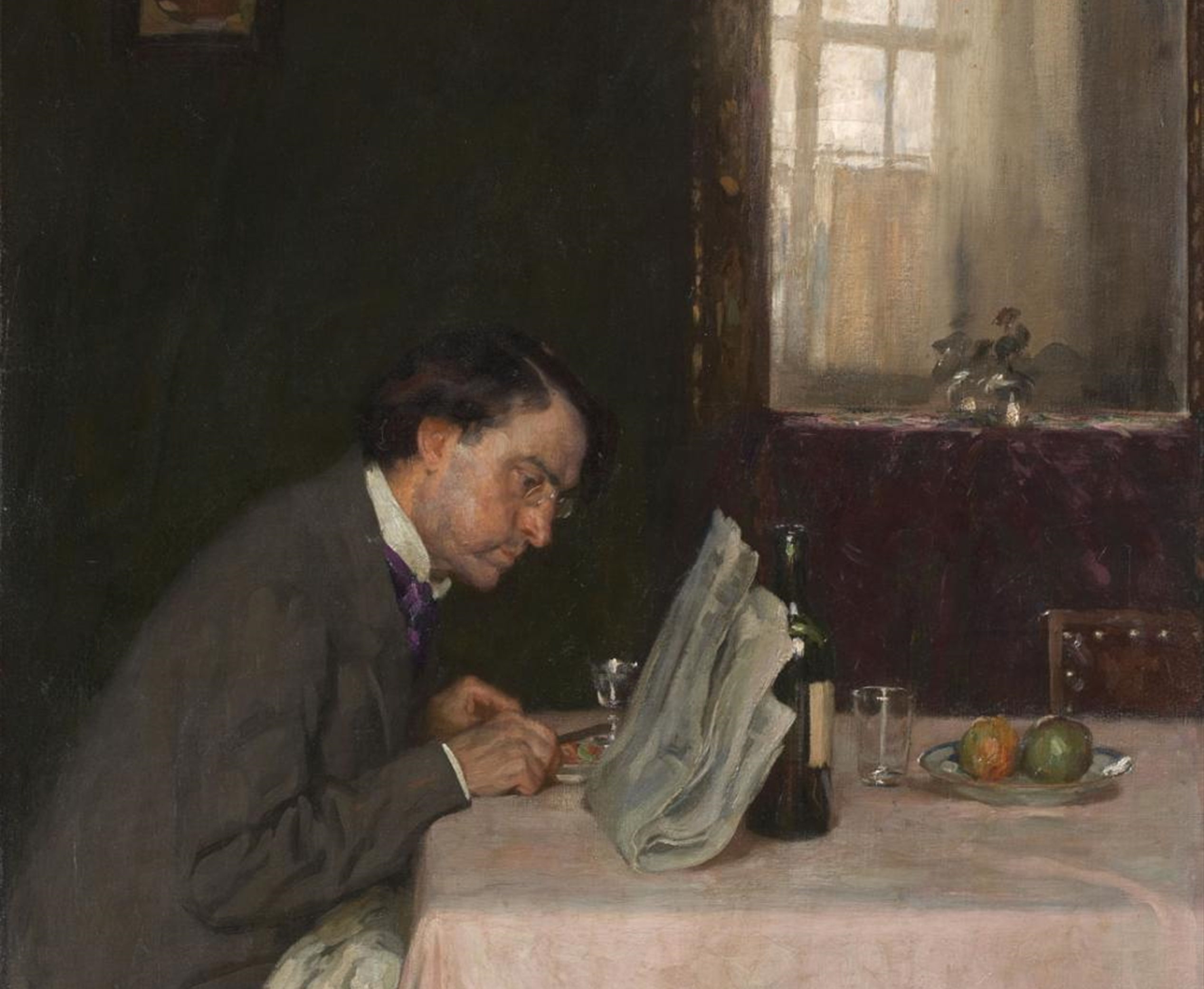
Arthur Kampf (1864 Aachen – 1950 Castrop-Rauxel), Der Zeitungsleser, Oil on Canvas. 70,5 x 60,5 cm (1908), from: https://www.lempertz.com