2 PhD positions in early modern history, 18th and 19th centuries at the University of Friborg, Switzerland

A collaboration involving FactGrid as the project ressource, the following scholarship announcement in French, English and German:

2 postes de doctorant-e en histoire moderne, XVIIIe-XIXe siècles (Université de Fribourg, Suisse)

 Le Département d’histoire de l’Université de Fribourg met en concours deux postes de doctorant-e-s en histoire moderne (4 ans, 100%) à partir du 1er mars 2022. Les postes sont intégrés au projet FNS The Mesmerism in Switzerland: interactions, transnational circles and networks, media / Le mesmérisme en Suisse : interactions, cercles et réseaux transnationaux, médias / Der Mesmerismus in der Schweiz: Interaktionen, transnationale Zirkel und Netzwerke, Media sous la direction de prof. Claire Gantet, financé par le Fonds national Suisse.

1 thèse Le mesmérisme en Suisse occidentale : sociabilités, mobilités, constellations

1 thèse Un flux d’informations : le mesmérisme en Suisse

Les projets se concentrent sur le problème du mesmérisme en tant que nouvelle thérapie très influente élaborée par Franz Anton Mesmer (1734-1815) – découverte de l’hypnose et son utilisation en médecine– et sur les relations entre croyance et science ainsi qu’entre patient et médecin. Ils le font en maniant des perspectives notamment d’histoire culturelle, d’histoire micro-historique et d’histoire transnationale. Les projets de thèse se situent dans le domaine de l’histoire des savoirs et étudieront les pratiques et relations d’interdépendance du mesmérisme. Une cotutelle avec un expert étranger est possible.

 Vos tâches

Vous développerez un projet de recherche indépendant sur le mesmérisme. Au cours de votre thèse, vous aurez l’occasion de participer à des ateliers et à des conférences internationales et d’échanger des idées avec des expert-e-s de votre domaine de recherche. Vos données complèteront les bases de données Harmonia universalis (https://harmoniauniversalis.univ-paris1.fr/#/) et FactGrid (https://database.factgrid.de/wiki/FactGrid:Early_Modern).

 Votre profil

Vous devez être titulaire d’un master en histoire, si possible des XVIIIe et XIXe siècles, ou dans un domaine connexe avant le commencement du poste. Vous savez mener une recherche de façon autonome et avez de bonnes capacités de lecture en français, en anglais et en allemand. La thèse peut être rédigée en anglais, en allemand ou en français. Vous devez avoir une adresse en Suisse durant la durée du contrat.

 Ce que nous offrons

Nous vous offrons la possibilité d’effectuer un projet de recherche indépendant en collaboration et en échange avec une équipe motivée. Le département bilingue d’histoire de l’Université de Fribourg vous offrira également un environnement de recherche stimulant. Dans le cadre de la thèse, vous aurez diverses possibilités de supervision et de développement professionnel, notamment la participation à des colloques, ateliers, conférences et publications. Nous offrons un contrat de quatre ans avec un salaire conforme aux taux du FNS pour les doctorant-e-s (environ 47’000 CHF la première année). Des fonds sont disponibles pour des activités de recherche spécifiques telles que des séjours de recherche et la participation à des conférences.

Votre candidature doit comprendre

  • Une lettre de motivation : Veuillez expliquer ce qui vous attire dans ce poste et en quoi vous êtes apte à répondre aux attentes
  • Votre mémoire de Master ou un travail de séminaire important, si possible avec le rapport des examinateurs
  • Un curriculum vitae détaillé
  • Copies de vos certificats et diplômes universitaires avec une liste des cours suivis
  • Noms et adresses électroniques de deux personnes de référence que l’Université de Fribourg pourrait contacter

 Vous pouvez rédiger la lettre de motivation et le CV en allemand, en français ou en anglais, selon votre préférence.

L’Université de Fribourg s’efforce d’assurer une représentation équilibrée des femmes et des hommes. Les candidatures de femmes sont donc explicitement les bienvenues. En tant que signataire de la Déclaration DORA, l’Université de Fribourg attache une grande importance à l’évaluation qualitative des résultats académiques.

Veuillez envoyer votre candidature sous forme d’un document PDF par courriel à prof. Claire Gantet (claire.gantet@unifr.ch) avant le 15 Décembre 2021.

Pour tout renseignement complémentaire, veuillez contacter Claire Gantet : claire.gantetnifr.ch.

PDF Download


2 PhD positions in early modern history, 18th-19th centuries (University of Fribourg, Switzerland)

The Department of History of the University of Fribourg invites applications for two PhD positions (4 years, 100%) in early modern history. The PhD thesis will be realized in the framework of the FNS project The Mesmerism in Switzerland: interactions, transnational circles and networks, media / Le mesmérisme en Suisse : interactions, cercles et réseaux transnationaux, médias / Der Mesmerismus in der Schweiz: Interaktionen, transnationale Zirkel und Netzwerke, Media directed by Claire Gantet and financed by the Swiss National Science Foundation. The positions will start on 1 March 2022:

1 PhD thesis: The mesmerism in western Switzerland: sociability, mobility, constellations

1 PhD thesis: An information flow: mesmerism in Switzerland

The project focuses on the problem of Mesmerism as the new and influential method of treatment developed by Franz Anton Mesmer (1734–1815)–discovery of hypnosis and its use in medicine–and the relationships between knowledge and belief or the physician-patient-relationship. It explores it by intersecting multiple perspectives such as cultural, microhistorical, and transnational history. The advertised PhD projects will be situated in the history of knowledge and explore practices and entanglements of Mesmerism.

Your responsibilities

You will define and conduct your own independent research project on Mesmerism. While writing your dissertation, you will be able to participate in international workshops and conferences with leading experts of the field. Your data will be filed in the databases Harmonia universalis (https://harmoniauniversalis.univ-paris1.fr/#/) and FactGrid (https://database.factgrid.de/wiki/FactGrid:Early_Modern).

Your profile

You hold a master’s degree in History (18th-19th century) or a related field by the time you enter the position. You should be highly motivated to do historical research and have good reading skills in French, English and German. Familiarity with history of medicine or history of Switzerland and paleographical or digital abilities are welcome. The PhD thesis may be written in English, German, or French. For the duration of the contract, residency in Switzerland is required.

What we offer

We offer you the possibility to develop your own research project in collaboration and exchange with a highly motivated team situated in the stimulating research environment of University of Fribourg’s bi-lingual department of history and you benefit from its contacts with international experts. Furthermore, we provide you with opportunities for professional development (participation in conferences and publications, workshops with experts in the field). We offer a four-year employment contract with a salary paid according to the SNSF rates for doctoral students (approximately 47’000 CHF for the first year). Extra funding for research activities such as travel to conferences and stays in research libraries is available.

Your application should include

  • A letter of motivation: Please explain what makes you a suitable candidate for this position and why you are interested in it.
  • Your MA thesis or a significant seminar paper, if possible with the examiners’ report.
  • A full CV.
  • Copies of your university transcripts and diplomas.
  • The names and e-mail addresses of two possible referees whom the University of Fribourg may contact.

The letter of motivation and the CV may be written in German, French, or English, according to the candidate’s preference.

The University of Fribourg strives for a balanced representation of women and men. Applications by women are therefore explicitly welcome. As a signatory of the DORA Declaration, the University of Fribourg attaches importance to a qualitative assessment of academic performance.

Please send your application in one PDF file by e-mail to Claire Gantet (claire.gantet@unifr.ch) until 15 December 2021 at the latest.

For further information, please contact Claire Gantet: claire.gantet@unifr.ch


2 Doktoratsstellen, Geschichte des 18. und 19. Jahrhunderts (Université de Fribourg, Schweiz)

Am Departement für Geschichte der Universität Freiburg sind ab dem 1. März 2022 zwei Doktoratsstellen in frühneuzeitlicher Geschichte (4 Jahre, 100%) zu besetzen. Die Stellen sind Teil des vom Schweizerischen Nationalfonds geförderten Projekts The Mesmerism in Switzerland: interactions, transnational circles and networks, media / Le mesmérisme en Suisse : interactions, cercles et réseaux transnationaux, médias / Der Mesmerismus in der Schweiz: Interaktionen, transnationale Zirkel und Netzwerke, Media unter der Leitung von Prof. Dr. Claire Gantet. Der Zeitpunkt des Stellenantritts ist der 1.3.2022.

1 Dissertation über die Akteure, Geselligkeitsformen, Mobilität und Netzwerke, 1780–1840

1 Dissertation über die Medien des Mesmerismus, 1780–1840

Das Projekt richtet sein Augenmerk auf das Problem des Mesmerismus als von Franz Anton Mesmer (1734–1815) entwickelte neue, maßgebende Behandlungsmethode (Entdeckung der Hypnose und ihre Verwendung in der Medizin) und den Zusammenhang zwischen Glauben und Wissen sowie das Arzt-Patienten-Verhältnis. Dieses wird u.a. aus kultureller, mikrohistorischer und transnationaler Perspektive beleuchtet. Die ausgeschriebenen Dissertationsprojekte sind zudem im Bereich der Wissensgeschichte situiert und werden die Praktiken und Verflechtungen des Mesmerismus untersuchen. Eine Doppelbetreuung (cotutelle) mit einem/einer auswärtigen Experten/Expertin ist möglich.

Ihre Aufgaben

Sie entwickeln ein eigenständiges Forschungsprojekt zum Mesmerismus. Während der Dissertationsphase werden Sie die Gelegenheit haben, an Kolloquien, Workshops und internationalen Konferenzen teilzunehmen und sich mit führenden Expert:innen aus relevanten Forschungsfeldern auszutauschen. Ihre Daten werden die Datenbank Harmonia universalis (https://harmoniauniversalis.univ-paris1.fr/#/) und FactGrid (https://database.factgrid.de/wiki/FactGrid:Early_Modern) ergänzen.

Ihr Profil

Sie sollten spätestens bis zum Zeitpunkt des Stellenantritts im Besitz eines Masterabschlusses in Geschichte der frühen Neuzeit oder der Neuzeit (18.–19. Jht.) oder einem benachbarten Fach sein. Sie sind forschungsorientiert und haben gute Lesekenntnisse in Französisch und Englisch. Linguistische und historische Vorkenntnisse zur damaligen Medizin oder zur Geschichte der Schweiz sowie paläographische oder digitale Fähigkeiten sind sehr willkommen. Die Dissertation kann in Englisch, Deutsch oder Französisch verfasst werden. Für die Dauer des Vertrages müssen Sie in der Schweiz wohnhaft sein.

Was wir bieten

Wir bieten Ihnen die Möglichkeit, ein eigenständiges Forschungsprojekt in Zusammenarbeit und Austausch mit einem motivierten Team zu verfolgen. Das zweisprachige Departement für Geschichte der Universität Freiburg und ihre Vernetzung mit u.a. französischen Spezialisten werden Ihnen darüber hinaus ein stimulierendes Forschungsumfeld bieten. Im Rahmen der Dissertation werden Sie verschiedene Möglichkeiten der fachlichen Begleitung und Entwicklung haben, darunter die Teilnahme an Kolloquien, Workshops, Konferenzen und Publikationen. Wir bieten einen vierjährigen Vertrag mit einem Lohn, der den SNF-Ansätzen für Doktorierende entspricht (ca. 47‘000 CHF im ersten Jahr mit steigendem Gehalt). Gelder für spezielle Forschungsaktivitäten wie Forschungsaufenthalte und Teilnahmen an Konferenzen stehen zur Verfügung.

Ihre Bewerbung sollte enthalten

  • Ein Motivationsschreiben: Bitte erklären Sie, was Sie an der Stelle interessiert und warum Sie dafür geeignet sind.
  • Ihre Masterarbeit oder eine längere Seminararbeit, wenn möglich mit Gutachten.
  • Ein ausführliches Curriculum vitae.
  • Kopien Ihrer universitären Zeugnisse und Diplome inklusive Liste der besuchten Kurse.
  • Namen und Mailadressen von zwei möglichen Referenzpersonen, die die Universität Freiburg kontaktieren kann.

Sie können das Motivationsschreiben und den Lebenslauf je nach Ihren Präferenzen in Deutsch, Französisch oder Englisch verfassen.

Die Universität Freiburg strebt eine ausgeglichene Repräsentation von Frauen und Männern an. Bewerbungen von Frauen sind deshalb explizit willkommen. Als Unterzeichnerin der DORA-Deklaration legt die Universität Freiburg Wert auf eine qualitative Beurteilung von akademischen Leistungen.

Bitte senden Sie Ihre Bewerbung bis zum 15. Dezember 2021 gebündelt in einem PDF-Dokument per Mail an Claire Gantet (claire.gantet@unifr.ch).

Für weitere Informationen kontaktieren Sie bitte Claire Gantet: claire.gantet@unifr.ch

Image: Sven Richard Bergh, Hypnotic Séance 1887 Wikimedia Commons
Paris to download

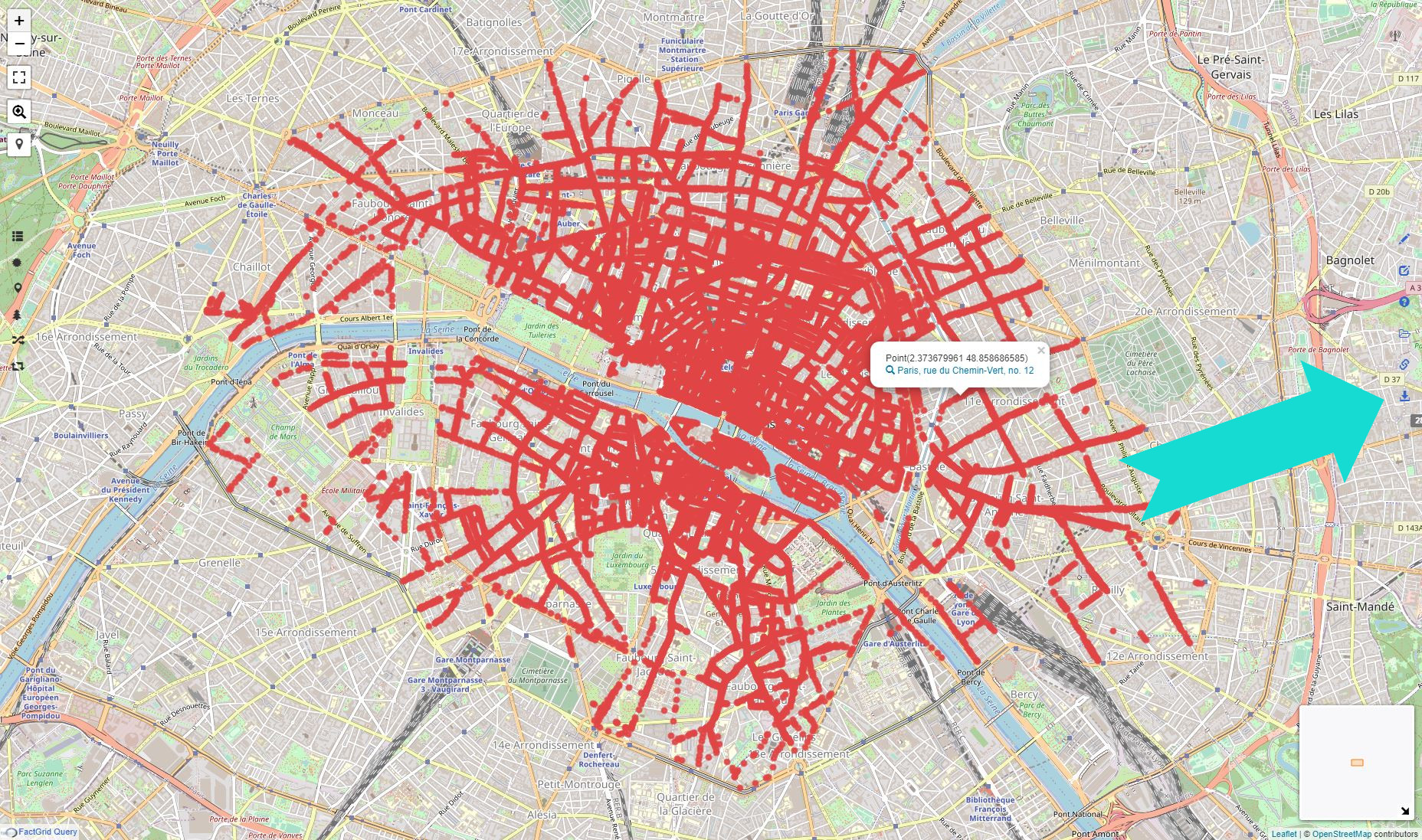
PARIS TO DOWNLOAD  comes with a double purpose: it is first designed to provide a dataset for historians to download with one simple click. Click the image below and a SPARQL query will bring the addresses of Paris c. 1830 onto a modern map.

Paris to download (click on the map) / link for the direct table download TSV formatted

On the right hand side you will be able to activate the menu that allows you to download the raw data behind this visualisation to your computer. TSV or CSV are the practical formats here. TSV (table separated) data can be copied and pasted into any spreadsheet. The download will come with the geographic coordinates and the address names, CC0-licensed and ready to use in any software environment of your choice…

…which might, however, not be the most interesting use to make of this data set. It should be far more attractive to create your own visualisations here on FactGrid with information you can put on any of the items underneath the visualisation. You will need an account to augment information on this data set and we are eager to open these accounts to all researchers working on historical Paris.

The collaborative project that we are offering here is still in its infancy. Its aim is to make resources on the history of Paris available to the general public, and more particularly historical data on Parisian roads and facilities. A lot of data exists on Paris but they are scattered and often difficult to access. FactGrid makes it possible to store, consult and retrieve them for free en masse and according to needs by simple queries.

PARIS TO DOWNLOAD  already provides a resource that will be of interest to all historians of 19th century Paris: a gazetteer giving the geocoded addresses of all buildings in Paris in the first half of the 19th century.

Some details below that might help to use the data set:

The history of house numbering in Paris

For a long time, urban addresses were identified by the names of houses and their signs (David Garrioch). Despite some attempts to number houses in modern times, it was not until after 1750 that real house numbering systems appeared in European and North American cities, and it was not until the 19th century that they became the norm for identifying urban addresses (Anton Tantner).

The house numbering errupted as a new element of rationality to order the city. As Anton Tantner and Reuben Rose-Redswood have shown, introducing numbers into the urban space is a ‘technique of power’ characteristic of the new governmentality that took hold in the second half of the 18th century. It was only later that the inhabitants themselves appropriated the new signage and made it a major tool for orientation and address location.

The history of house numbering in Paris is part of this general history of numbering (see Numérotation des immeubles de Paris). The first numbering system in Paris, introduced in 1779, was the work of a private contractor, Kreenfelt. This system is sequential by street and follows the course of a horseshoe. The doors, not the buildings, are numbered. In 1791 this first system was abandoned in favour of a system of house numbering by district (named section). In this system the numbers could be very large and the same street could have several identical numbers in case it belonged to several sections. Finally, because of these disadvantages, the system of 1791 was abandoned in 1805 and a new system was introduced on the initiative of the préfet Frochot, now inspired by the numbering system of Philadelphia

The 1805 numbering system

Frochot’s system is the one that it is still used in Paris today. It is sequential by street and of the even/odd type. The series of numbers in a street is made up of even numbers on the right side, and odd numbers on the left side. The right side is the one to the right-hand of the passer-by going up the street towards the Seine. If the street is parallel to the Seine, the right side is the one to the right-hand of the passer-by going up the street in the direction of the river course. The numbers are visibly inscribed on the facades of each house (document 1).

Document 1: No. 13, rue de la Bûcherie,  drawing by J.-A. Chauvet, coll. Musée Carnavalet

Although the 1805 system is still used in Paris, many streets were renumbered during the 19th century. The most important reform of Parisian numbering was carried out by the prefect Rambuteau in 1847. In addition, the incorporation of neighbouring communes in 1860 and the Hausmannian transformations considerably extended the house numbering compared to the initial state. Since the end of the 19th century, however, address numbering has changed little in Paris.

Today, the Parisian house numbering covers about 150,000 addresses, compared to about 28,000 in 1805.

Parisian directories of the 19th Century

House numbering facilitated the making of address books and directories (see a list in the wiki Geohistoricaldata). The most famous one is the Bottin, the directory published by Sébastien Bottin. Each year since 1819, Bottin published the addresses of the trades and those of the most notable inhabitants (see document 2)

Addresses of the boarding schools, Bottin 1825
Document 2: Bottin, 1825: addresses of boarding schools. Source: Gallica

In 1834 Guyot de Fère published a Statistique des lettres et des sciences and the following year a Statistique des Beaux-Arts which gave the addresses of Parisian writers and artists. Numerous other publications provided the addresses of shops, workshops, schools, associations, etc. In other words, we have easily accessible sources for mapping the economic, social and business life of the city in the 19th and 20th centuries, provided we can locate the address numbers.

How to locate an old Parisian address?

Finding the location of an address is now a breeze: just go to OnStreetMap, Google Maps, or any other web mapping platform. You can also easily download for free the dataset of the current 150,000 Parisian addresses on the site Data Paris. But what about addresses of the past? If old addresses cannot be located, directories are of no use to the historian. It is therefore not surprising that this type of source has been little used in historical works on Paris until now.

The present data set has taught me some of the intricacies of locating Parisian addresses of the past. I leave aside here the difficult question of the location of Parisian addresses before the end of the 18th century. Let us see how it would be possible to proceed from the creation of the first house numbering system in 1779. It is easy to understand that the only possible method is to geocode the address, i.e. to associate the address number of each house with its geographic coordinates, but it does’nt get us very far: how do we know the geographical coordinates of an address? That is the question.

The problem of the maps

The only possible answer is: having a map. We can use current maps. Especially OneStreetMap is of good value here, as it displays house numbers. For example,  no. 6 of Place des Vosges where Victor Hugo had a flat between 1832 and 1848  (now the Musée Victor Hugo) was already  no. 6 at that time. The same for no. 10, rue Monsieur-le-Prince, where Auguste Comte lived from 1841 to 1857 or for  no. 8, rue de Caumartin, where Stendhal wrote his famous novel The Charterhouse of Parma in 56 days in 1838. The address of Eugène Delacroix’s studio from 1844 to 1858 is still at the same address, no. 58, rue Notre-Dame-de-Lorette. etc.

The majority of the address numbers of the early nineteenth century has not changed. But there are many exceptions. For instance, Stendhal wrote his novel The Red and the Black at no. 71, rue de Richelieu, which is now no. 69 of the same street (the original building has been demolished). Géricault’s studio was at no. 25, rue des Martyrs, which is now the no. 23. etc. But there are worse cases. A lot of old streets of Paris have been destroyed, reduced in size or extensively redesigned. For instance,  no. 27, rue Notre-Dame-des-Champs, where Victor Hugo wrote his play Hernani in 1829, had disappeared with the opening of the Boulevard Raspail.

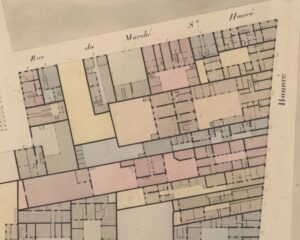
The examples show that using current maps remains an unreliable method of locating old Parisian addresses. To solve the problem, we would like to have georeferenced historic maps of Paris displaying house numbers. Obviously such maps do not exist ready-made, but they can be created from two old collections of maps based on the excellent topographical survey realized by Verniquet in 1790: the Atlas Vasserot drawn up between 1810 and 1836, and the Atlas Jacoubet published between 1827 and 1839. Both of them indicate the house numbers (see documents 3 and 4).

Plan Vasserot. Detail of a sheet
Document 3: Atlas Vasserot. Rue du Marché-Saint-Honoré
Plan Jacoubet. Detail of a sheet
Document 4: Atlas Jacoubet. Rue du Marché-Saint-Honoré

Georefencing and geocoding

The georeferencing of the Atlas Vasserot has been realized between 2006 and 2010 by the team ALPAGE (LAMOP, CNRS/Paris 1, resp. H. Noizet) and the result is available on the platform ALPAGE. A georeferencing of the Atlas Jacoubet has also be realized by the team SIGParis18-19  (EHESS), but the resulting georeferenced map is not yet published.

The next step is the geocoding of the addresses. The work has been done on the georeferenced Atlas Vasserot by A.-L. Bethe (ALPAGE) in 2010 and the data set (about 28000 addresses) is available on the platform ALPAGE, données Vasserot. The team SIGParis18-19 has used its georeferenced map of the Atlas Jacoubet (transferred to the Atlas Verniquet of 1790) to geocode the Parisian addresses of 1789 (about 23000 addresses). The methodoly is explained in an article with some applications (Anne Varet-Vitu, Mathieu Marraud, Éric Mermet, 2020), but the dataset is again not yet published. I would add that a wiki project Localisations parisiennes (1780-1810) was launched in 2017 by Dominique Waquet to make a street-by-street inventory of Parisian buildings during the  Revolution aiming at a future geocoding of the addresses following the numbering system of 1791, but so far only the addresses of the rue Saint-Honoré have been located.

The Parisian addresses on FactGrid

Each of the 28000 Parisian addresses on FactGrid  is a Q-item. The form of its label is  :
“Paris, street name, no. #”
and its description indicates the numbering system and the initial time (most often 1805). English, German and French labels and descriptions are available. You can also select these languages on the FactGrid viewer.

Each address has the following  linked data:
1. the street , 2. the quarter, 3. the city (Paris), 4. the numbering system, 5. the geographical coordinates (WGS84) with the parcel ID as qualifier and the reference to the dataset “Données Vasserot”; some items are additional linked data like the previous address at the same location.

Each street of Paris (for the period 1805-1850) is also a Q-item. See the example of the rue Saint-Honoré. The same for the quarters and the arrondissements (for the same period).

The dataset “Données Vasserot”

The project PARIS TO DOWNLOAD has put the dataset “Données Vasserot version 1 (2010, A.-L. Bethe), Alpage” on FactGrid (with the agreement of ALPAGE).

The dataset “Données Vasserot” is based on information collected  before the mid-1820s and does not include the addresses for streets opened after 1805. However, these addresses, for which the Atlas Vasserot is of no help, are in FactGrid.  Their geocoding is based on the Atlas Jacoubet combined with information coming both from the Dictionnaire administratif et historique des rues de Paris and from the Bottin of 1850 (this volume, unfortunately not yet available on the internet, contains a conversion table between the old address numbers and the numbers adopted after the 1847 reform of the house numbering). This geocoding is here work in progress and some streets and addresses are still missing.

For the moment, the Parisian addresses produced on FactGrid by PARIS TO DOWNLOAD are reliable for the period between 1805 and 1848. These data should be used with caution for the period after 1848, as the Rambuteau reform of the house numbering introduced many changes, even if they were mostly shifts of a few numbers. In addition, the incorporation of neighbouring communes in 1860 dramatically increased the number of streets and addresses in Paris. It would be very useful to undertake geocoding  all these addresses, but that is another task.

Querying addresses on FacGrid

All the Parisian addresses can be downloaded by using the FactGrid query service.

One of the advantages of the FactGrid repository is that it is possible to make a selection. Suppose you want only the addresses of the rue de la Harpe. You can get a map (don’t forget to launch the query) or a data table (don’t forget to launch the query).

You can select all the addresses of a quarter, for instance the addresses in the Quartier de l’Ecole-de-Médecine (don’t forget to launch the query), or all the addresses of an arrondissement, for instance all the addresses in the former 11e arrondissement (don’t forget to launch the query). You can also get the list of all the streets of Paris (between 1805 and 1850), etc.

If you have a data file with Parisian addresses (for instance the list of all Parisian physicians extracted from  the Bottin of the year 1825), you can download the 28000 geocoded addresses from FactGrid, match these addresses with the addresses of your file in order to collect the geographical coordinates and use your completed data file to create a map on your favourite GIS. OpenRefine makes the work still easier (an OpenRefine service will be available very soon on FactGrid).

However, the best option is to put your data file directly on FactGrid and to add a statement Address (P208) to each Q-item you have created, in order to benefit of all the power of the FactGrid database and query service. See, as a simple example, the eleven Parisian addresses of Auguste Comte.

As said in the beginning: The dataset is designed to work in any other software environment, but it is beyond that an invitation to aggregate information here on the site — on the address items and on the items of people and objects you are interested in and you would like to create and to interconnect within the data set. It’s free, open and collaborative.

Simply have an account and contribute!


Video presentation of 19 May 2022:

(Still not yet) all the members of the Strict Observance

FactGrid began in 2018 with the input of Hermann Schüttler’s list of 1,351 (verified and unverified) members of the Illuminati, our Items Q25 to Q1376.

Items Q249748 to Q250919 widen that list with an interesting overlap of 111 names with the members of the Strict Observance. It was the largest and most widespread Freemasonic umbrella organization in Europe, that imploded with a massive impact on the world of Freemasonry in 1782, the same year when the Illuminati began their three years of rapid growth before they imploded in turn from 1786-87 and ceased to exist altogether by August 1788.

The Strict Observance had, in hindsight a longer life, beginning in either 1751 or 1764, depending on how we define their beginning. In a way the Order has not disappeared altogether. It lives on in an augmented form within Sweden’s branch of national Freemasonry, the Swedish Rite. Swedish Masons affiliated with the Strict Observance only in 1778 at the convention of Wolfenbüttel with the election of Duke Carl of Södermanland (later King Carl XIII of Sweden) as Grandmaster, after the death of their founder Baron von Hund in 1776. The Swedish Masons then withdrew in 1780 and created their own IXth Province of the Order, having constructed their own distinct form of Freemasonry on top of the superstructure of the Strict Observance rituals. Retaining ritual elements from the earlier degrees of Carl Friedrich Eckleff, Duke Carl revised the Strict Observance rituals and constructed additional degrees, giving his new system its own distinct national flavour of Freemasonry.

The Rite of Strict Observance, also known as the Order of the Temple, was the most influential 18th century Masonic system in Germany and possibly on the European continent. It was the first Masonic system to transition fully into a secret society, complete with Order Name alias for the members, and an inner and outer order being led by “unknown superiors”. For their correspondence there were multiple complex ciphers, along with substituted geographical names for cities and their own calendar system. These Masons were said to possess the true secrets of Freemasonry and according to their liturgy, claimed to directly descend from the Knights Templar in an unbroken chain of successive Grandmasters. Though this legend was ultimately proved to be spurious, resulting in the colossal collapse of the Order at the 1782 Wilhelmsbad convention, its brief period as the original and dominant German Masonic system forever changed the development of Freemasonry in Germany and its surrounding countries. From its ashes emerged the Zinnendorf Rite, the Swedish Rite, the Chevaliers Bienfaisants du la Cité Sainte, and the Order of the Illuminati. It claimed some of the most influential members of society, along with Kings, Princes, and members of the nobility. A majority of these members continued their journey in Freemasonry after its demise, joining the ranks of the descendants of the Strict Observance. Now for the first time, a comprehensive and detailed member list of the Order has begun to emerge on FactGrid, and a clearer perspective of its legacy has begun to be manifested.

It is easy to add additional columns, e.g. on family ties, places of education, further membership statements and so on by modifying the SPARQL query with further requests. FactGrid’s Directory of Property states all the Properties that can generate additional columns in this data set. You can switch languages on the Query Service – all these data are available in English German and French.

The Strict Observance: Enlightened Masons as heirs of the Templars

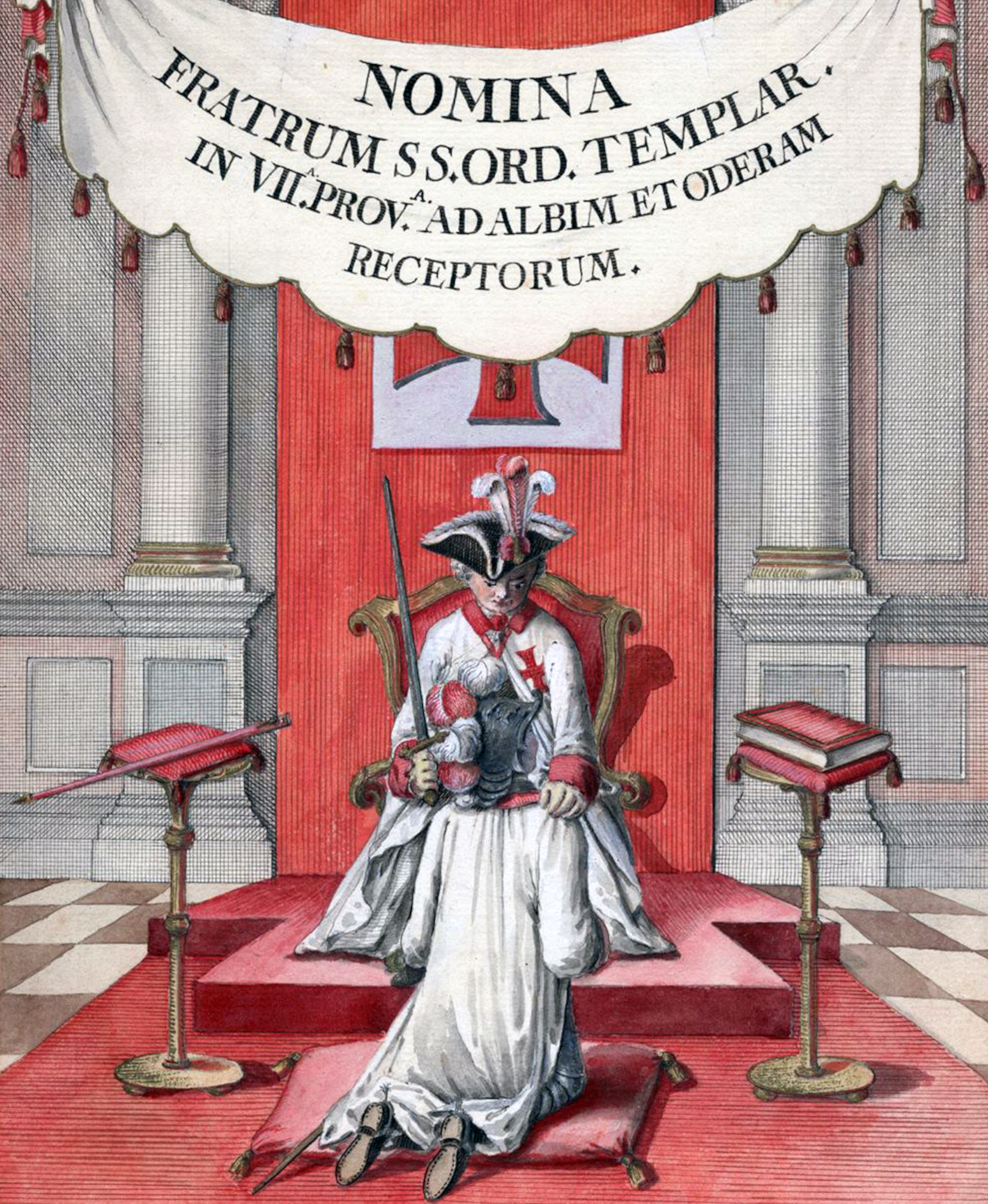
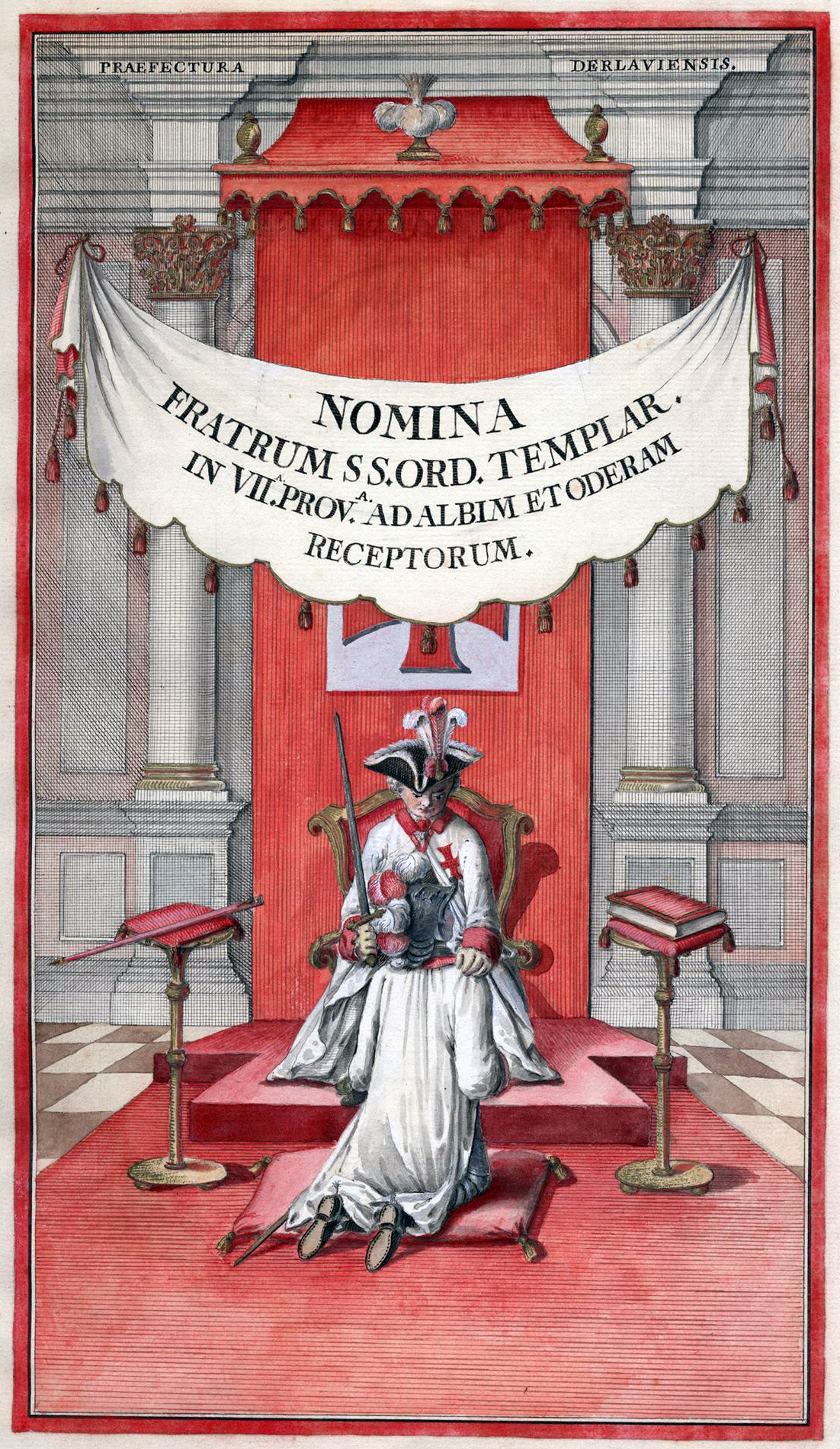
This image depicting the reception of a newly made Knights Templar is part of the collection known as the Derla Manuscripts, and are housed at the Musée de la franc-maçonnerie, Paris. They represent a nearly complete collection of rituals and records for the Derla Prefecture of the Strict Observance in Leipzig, 1775.

The history of Freemasonry is deeply intertwined into the history of the Enlightenment, and indeed the organization itself is purely a child of the century of light. This association founded on, and dedicated to, the principles of self-perfection, through a moral application of unique symbols and allegories, the equality of men, and self-governance under the divine guidance of deity, offered an attractive proposition to men of all stations in the 18th century. Merchant and Noble, all are recorded in the minuet books for posterity without distinction. The association is more than the sum of the moral precepts it imparts and is equally experiential, as it is fraternity bound by common initiation ceremonies. Each Masonic body therefore has its own unique variations in the ritual and these different flavours give its own distinct character. Freemasonry was exported from England to the continent of Europe in earnest in the 1720’s and by the middle 1730’s there were a handful of German Lodges.

Where did they come from, how were they connected within the world of Freemasonry?

Lodges in Germany primarily worked only the first three degrees of Freemasonry from 1736 through the early 1740’s. Many of the fragments that we have of these early rituals indicate that the first German language printing of Pritchard’s Masonry Dissected, had a profound impact on the origins of German ritual. The establishment of the Scottish Lodge l’Union annexed to the Berlin Lodge the Three Globes on 30 November 1742, and its chartering of daughter lodges in Germany and surrounding countries, meant that German Masons effectively had four Masonic degrees being offered, culminating at the Scots Master degree. This arrangement ran until the mid-1750’s and by the end of that decade, French high degrees began to appear during the Seven Years War and were combined and augmented into a set of high degrees called the Clermont Rite. The Strict Observance therefore is a revision to the existing tradition, with a new capitular superstructure at the helm.

The question of when precisely did the Strict Observance begin is a matter of perspective. Did the Order begin with Baron von Hund’s founding of the first Lodge in Unwürde in 1751 or is it later when the top two degrees containing the Templar liturgy and superstructure are constructed along with the Lodges uniting under this banner at the treaty of Altenberga in 1764?

What did they offer to members?

The Rite was constructed to attract the most wealthy and influential Freemasons. Expensive initiations and dues, elaborate costumes and regalia, rich ceremonies, and lavish conventions were tailored to whet the appetites of the most well to do members of society. It was a system of six-degrees and supposedly being led by Unknown Superiors. Additionally there was a financial charity scheme established much in the same vein as the charity scheme of the Premier Grand Lodge of England. Members could ask for assistance, and provided that their situation was not the result of bad housekeeping, they received a pecuniary contribution. Fraternal assistance was a particularly valuable proposition, in an age without social safety nets.

Who could become a member?

Theoretically anyone could be a member of the strict Observance, as there were no explicit provisions with respect to class, provided that a candidate was of the Christian faith. The liturgy in the ritual of the Rite is broadly constructed upon Christianity, and specifically upon the betrayal of Jacques de Molay and the restoration of the Templar Order. The issue of religion here is less of a concern with belief and more a concern of suitability. Practically speaking the initiation fees, regalia costs, dues etc., were of such a level that entry was excluded to at least the middle class and even there not without some considerable cost. This is visible in the professions of the members.

We could actually give career statements on almost all the members – the problem at this moment is the importation of the statements that remain in Swedish on the Labels of the Swedish members.

What rites did they perform?

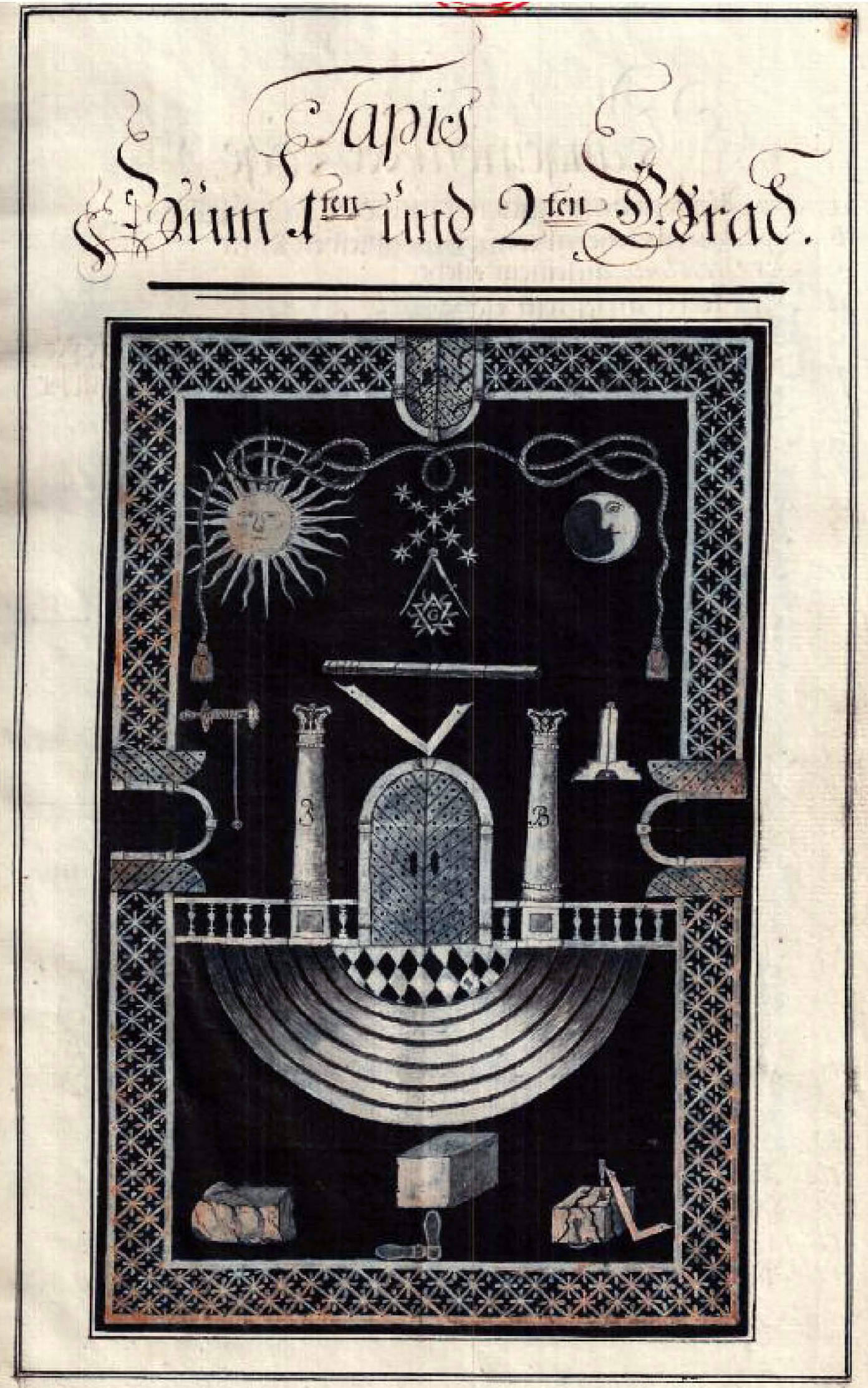
Carpet or Tapis for the Apprentice and Fellow degrees of the Strict Observance. From the archives of the Frankfurt Lodge Zur Eingkeit in 1776.

The Strict Observance was effectively a revision and then an expansion of the existing German Masonic traditions. The first three symbolic degrees retain the so-called ancient landmarks making them acceptable with respect to regularity but differ, however, in key places in the ritual. There are technical changes and also insertions evident as well. The tracing boards of each degree differ from the standard rituals offered in other lodges at that time. The same is true for the Scots Master degree. These innovations in the ceremonies are unique to the Strict Observance, and are deliberate as it is these subtle differences, that build up the Templar legenda revealed later in the fifth and sixth degrees. Hund effectively built a Templar secret society, high degree system on top of the extant Masonic system. The initiate transitioned from being merely a Freemason and became a Knights Templar complete with an elaborate knighting and investiture ceremony. The Masonic degrees comprised the outer order and the Templar degrees comprised the inner order. Its these concepts that Knigge drew from when he set about building the degree system of the Illuminati from 1780-1784.

Strict Observance Illuminati
The Strict Observance does not have a Preparatory Order. I. Minerval Class. Preparatory Order (non Masonic).
1. Novice.
2. Minerval.
3. Minervalis Illuminatus.
Outer Order.

St. Johns Lodge.
— 1° Apprentice.
— 2° Fellow.
— 3° Master.

St. Andrews Lodge.
— 4° Scots Master.

II. Freemasonic Class.

St. Johns. Lodge.
— 1° Apprentice
— 2° Fellow
— 3° Master

St. Andrews Lodge.
— 4° Scottish Novice
— 5° Scottish Knight

Inner Order. (Capitular).

— 5° Secular Novice.
— 6° Knight.

III. Mysteries Class.
Lesser Mysteries.
— 1. Presbyter / Priest.
— 2. Regent.
Greater Mysteries.
— 1. Docetists.
— 2. Philosophus.

What was the internal structure?

Governance of the Strict Observance was organized at two levels; an administrative level and also at a local level. The Saint John’s Lodges offering the first through the third degrees were governed by the elected officers of the Lodge. Above this lodge was Saint Andrew’s Lodge administering the fourth degree, Scots Master, and governed by its own elected officers. Above this lodge was the Chapter, offering the Novice and Knight degrees, and administrating not only the Chapter, but also the whole local presence of the Strict Observance in each locality. Reports were constructed and a portion of the monies received were forwarded from the Treasurers and Secretaries of both St. John’s and St. Andrew’s Lodges to their counterparts in the Chapter. The Chapter abstracted these reports and forwarded its portion of the monies in conjunction and sent them the Prefecture. The Prefecture comprised of several chapters performs the same functions and reports to the Provincial Grand Master of the Province. Provinces are composed of several Prefectures and assembled roughly every few years at conventions to work out the business of the Order, and often to settle internal disputes.

Knigge again borrowed from his time in the Strict Observance as well, with respect to external structure. The main difference is that Minerval Assemblies, the Preparatory Order unique to the Illuminati is included at the local level and subordinate to the St. John’s Lodge. Knigge also made refinements at the Administrative level as well. Provinces were localized within states, whereas they had crossed these boundaries within the Strict Observance. Additionally Provinces in the Illuminati reported to the National Inspector and these Inspectors were to be united at conventions called National Inspections. None of this ever occurred however, as the Illuminati faded into obscurity as quickly as it had ascended.

Strict Observance Illuminati
Administrative Level.
— Province. (Prv. Grand Master)
— Prefecture (Prefect).
Administrative Level.
— National. (Regents)— Prefecture. (Priests)
Local Level.
— Chapter. (5°, 6°)
— St. Andrew’s Lodge. (4°)— St. Johns Lodge. (1°, 2°, 3°)
Local Level
— Chapter. (Priests)
— St. Andrew’s Lodge. (Scottish Novices and Knights)
— St. Johns Lodge. (1°, 2°, 3°)
— Minerval Assemblies. (3°)

Disintegration and Survival

The Strict Observance ceased to exist much in the same way it began; at a convention. From the Templar perspective the rite was born, chaotically at the convention of Altenberga in 1764, after a Gentleman named Leucht passed himself off as a Superior of the Templars named Johnson. Baron Karl Gotthelf von Hund assumed control after Johnson had appointed him Heermeister, suspecting him of fraud and had him imprisoned after he confessed to this deception. Hund assumed command of the Order though it was a risky venture.

Johnson sought to gain control by deception over all of the local lodges practicing the Clermont System of high degrees, a composite of French high degrees fortified with alchemy and theosophy. Exploiting the occult leaning tendencies of the local Lodges and using a sleight of hand involving the production of gold, he proceeded to organize a general convention in effort to alter their masonic system and place himself at its head. Johnson had the deputies of the local lodges bring their rituals and papers and had them burned while introducing his new ceremonies. This singular act, and subsequent variability in the receptions conferred immediately afterwards by Johnson and von Hund, quickly led to the 1764 Altenberga Convent, and the only order of business was to reform all of the Lodges and join them to the Order of the Temple. Standardization was the ultimate goal.

During the convention it was discovered that Johnson was a charlatan named Leucht, and he was ultimately arrested and imprisoned extrajudicially until his death in 1777. Baron von Hund found himself in a very precarious situation, and at stake was no less than the future of local Masonry, given that all of their records had just been immolated by a fraudster. Hund seized control and stabilised the situation. Johnson’s new rituals and economic plan were to be implemented despite his roguery, out of necessity.

Johann Schubart, a close associate of von Hund, was tasked with implementing this new reform on all of the Lodges with the assistance of J.J.C. Bode. Through Schubart, Hund used the conferral of these new degrees to gain favour over the brethren, and to assert himself as being the Heermeister or Chief of the Army. Key was the Lodges participation in the newly crafted financial scheme, the Plan ad Interim. This move was not without suspicion, however and many of the lodges altered or flatly refused participation.

Regular conventions were organized as a result. These conventions served partly to enact new policy and reforms, and partly to maintain control of a rapidly expanding system. In 1768 the so-called clerical Branch appeared and much to the chagrin of the Brethren, they were incorporated into the Order by Baron von Hund. The Clerical Brethren in fact practiced a different form of the high degrees with a bent towards the occult sciences, and this inexplicable act his called into question, in the minds of many precisely how was Baron von Hund initiated into the Order of the Temple?

At the convention of Brunswick in 1775, von Hund said that ‘he had been received into the Order in Paris in 1743 by a Superior, Bro. von der rothen Feder, in the presence of Lord Kilmarnock, and had then been introduced to the Pretender. On various occasions subsequently Bro. von der rothen Feder had asked Bro. ab Ense for certain sums of money for the American undertakings. Finally, however, Bro. ab Ense had grown tired of these demands and had terminated this correspondence. This episode will still be in the memory of most of the Right Worshipful Brethren of the Order, as will the story that when the Reverend Bro. ab Ense was asked to reveal more about the identity of Bro. von der rothen Feder he burst into tears and assured his questioners with the warmest emotion that ‘to do so would be against his oath and his conscience’ and that, if he revealed his identity completely, then ‘he would upset certain more worthy persons.’ Earlier that same year at the convention of Hamburg he with great difficulty presented a document in cipher which was supposed to be his patent of authority. Ultimately he only showed it to four brethren, none of which could decipher let alone read it.

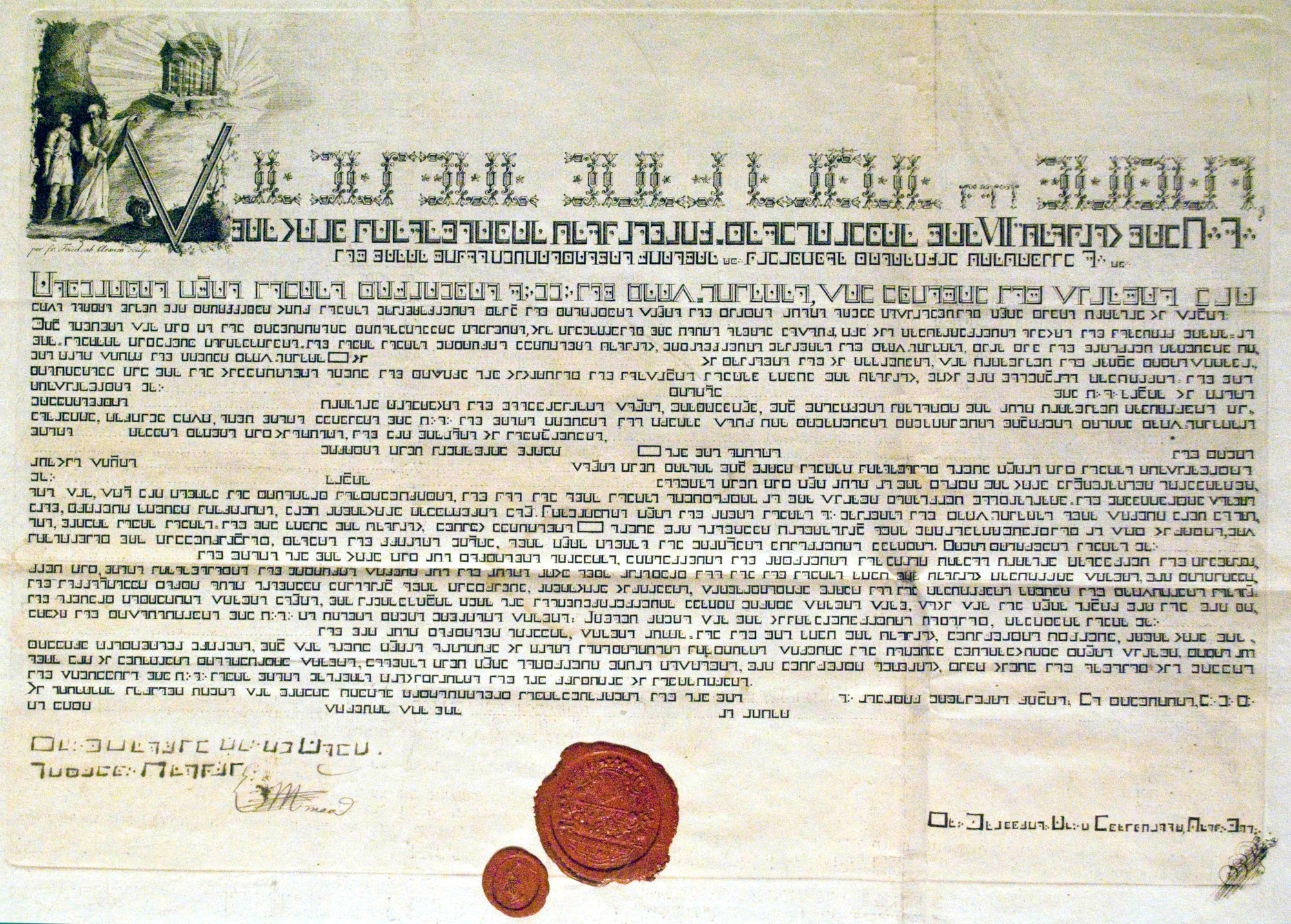
Masonic members patent in cipher. From Den Danske Frimurerorden Archiv.

Ultimately von Hund never revealed the identity of his initiator and took his secret with him to the grave in 1776, his fortunes greatly reduced through his support of the Order. This started the terminal decline of the Strict Observance. Only recently has his patent been deciphered, but sadly no new information has been gleaned from the transcript, as it is merely a recounting of his initiation by the so-called Knight of the Red Feather. In the subsequent convents after his death, Carl the Duke of Södermanland was proposed and elected Grand Master of the Order in 1778 at the convention of Wolfenbüttel, and only two years later resigned. Carl’s election was rejected by the Grand Lodge of the Three Globes in Berlin, who withdrew from the Order, and thus the unravelling began in earnest and culminated at the convention of Wilhelmsbad in 1782. At this convention the association with the Knights Templar was officially removed, and the French Brethren coalescing around the orbit of Jean Baptiste Willermoz officially proposed that the new reform ritual constructed by Willermoz in 1778 and being worked in France under the CBCS, be adopted as the official ritual. This proposition was rejected by the German Lodges, and the Strict Observance ceased to exist in precisely the same manner it came into existence; at a convention. It had become clear even in von Hund’s lifetime that there were never really any Unknown Superiors directing the Order, and this issue was amplified after his demise.

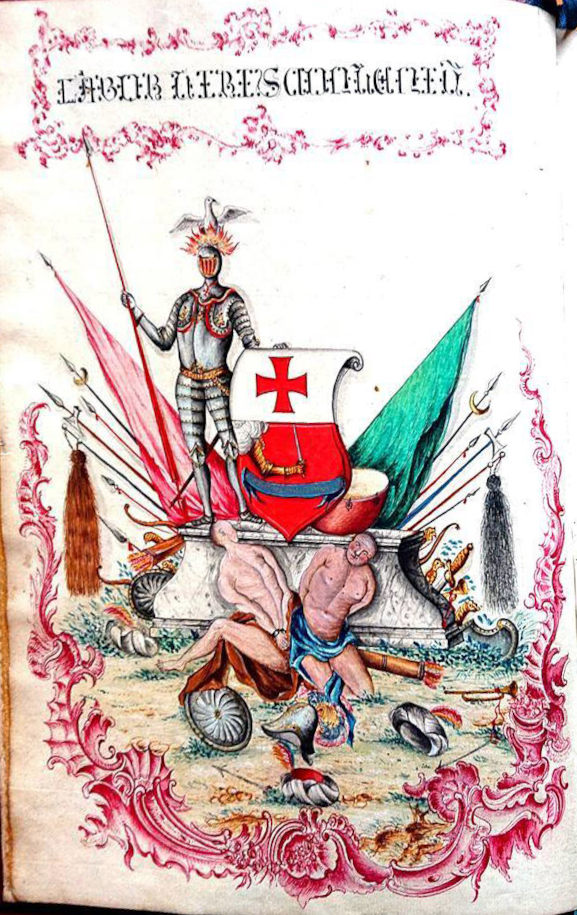
Labor uiris conuenit; Labour is suitable for men. From Den Danske Frimurerorden Archiv.

The death of the dominant Rite in Germany created a massive power vacuum, that was quickly filled by her daughter systems. The real legacy of the Strict Observance therefore is that it was the mother of several subsequent high degree systems, and its scope and influence forever changed Freemasonry in Europe.

Were the Illuminati a counter movement? The answer will, apparently, be a “yes and no”. The entire organization adopted structures, yet the Illuminati as represented by Knigge at the convention of Wilhelmsbad, made eventually a major acquisition of J. J. C. Bode who in turn with Knigge brought many members of the Strict Observance with them into the Illuminati. Ultimately the convention of Wilhelmsbad ended the Strict Observance while at the same time gave birth to the CBCS. The Illuminati were a counter movement of and the antithesis to the CBCS, and were in competition not only with them, but also with the Gold und Rosenkreutzer Orden for the members of the Strict Observance.

The present data set

The main source of the present input have been the 1,189 members of the Strict Observance listed in the 19th century – privately printed in 1846 by a Brother Berndt, composed by a Brother von Lindt, known as the Verzeichniss sämmtlicher inner Ordensbrüder der Strikten Observanz. These are the members of the “inner order” and from this perspective the most valuable and influential list possible.

The fusion of this list into FactGrid created a much larger data set of now 1,596 members – certainly without reaching the complete number. Hermann Schüttler had identified several new members, but the largest subset came here with the input of the 4,200 18th-century Swedish Freemasons which Andreas Önnerfors provided earlier in 2020.

The dynamic list is with all these inputs conclusive on the leadership level of the Strict Observance yet it will not fully account for the lower ranking members at the local levels, which will create the largest position of the membership. Over time these local records will be populated, and the overlaps to other organizations will grow more substantial.

We will now have to learn how to use these data. Von Lindt’s, Verzeichniss sämmtlicher inner Ordensbrüder der Strikten Observanz was a defined paper publication. One could run through its lists to identify a particular member with its internal name and localization, but the database does this job far better. Type in any of the internal names into the basic search field and you will be in the data set of the person who adopted this name. Our list is enriched with name variants in the aliases – you get the variants in the autocomplete when looking for a person’s data set.

At present,  we are now handling information in a web of interconnected statements; the entries of all members including information on the provinces and the local affiliations. If you are ready to modify the following script, you get the listings for any prefecture you are interested in or run any other filter on the set like these two:

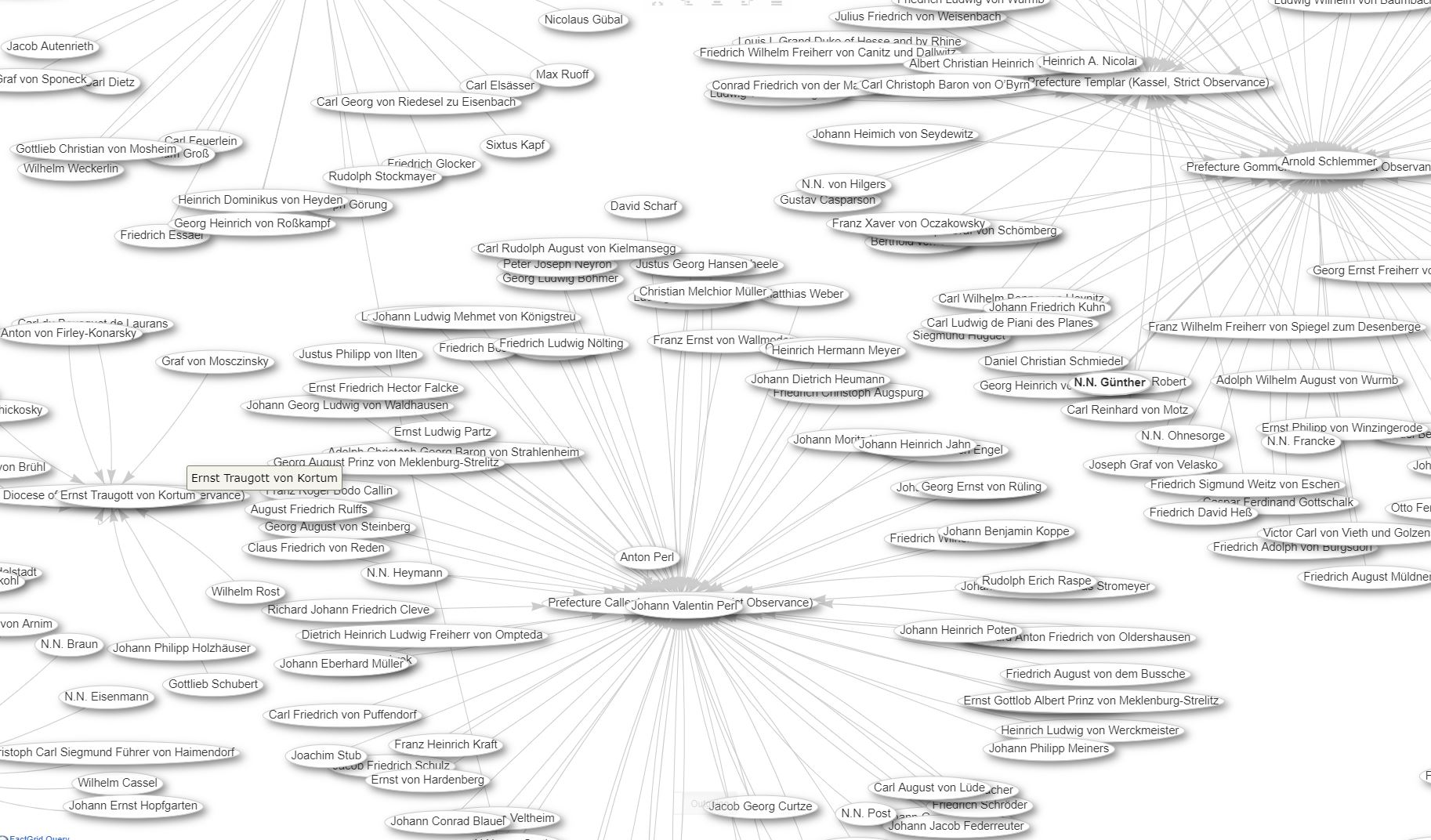
You can just as well create a network graph to see all these members in their respective local networks:

Screenshot: the local networks of the Strict Observance, detail view

The following searches gives you the list of the provinces with their respective prefectures – on a table and on the map – both lists are useful as they give the Item numbers or specified explorations of the prefectures and provinces

Many of the members have career statements on their personal records. The following bubble graph gives the full spectrums without further accumulation – not very practical as this gives a pattern of a load of variations. The statements are, however, part of a provisional classification, so that you can also sort them under a first classification – links two and three give this homogenized pattern in bubble and bar charts:

The representations remain problematic as they accumulate practically all the career statements made on all these persons over their respective lifetimes. It is not that easy to formulate a search that asks for everyone’s position in a year like 1780 – both the search and the data have to be prepared for such a representation.

Many of those listed have further membership statements on their items. It is easy to create a table of all these membership statements – and to convert this table into a bubble chart that shows the size of these overlaps.

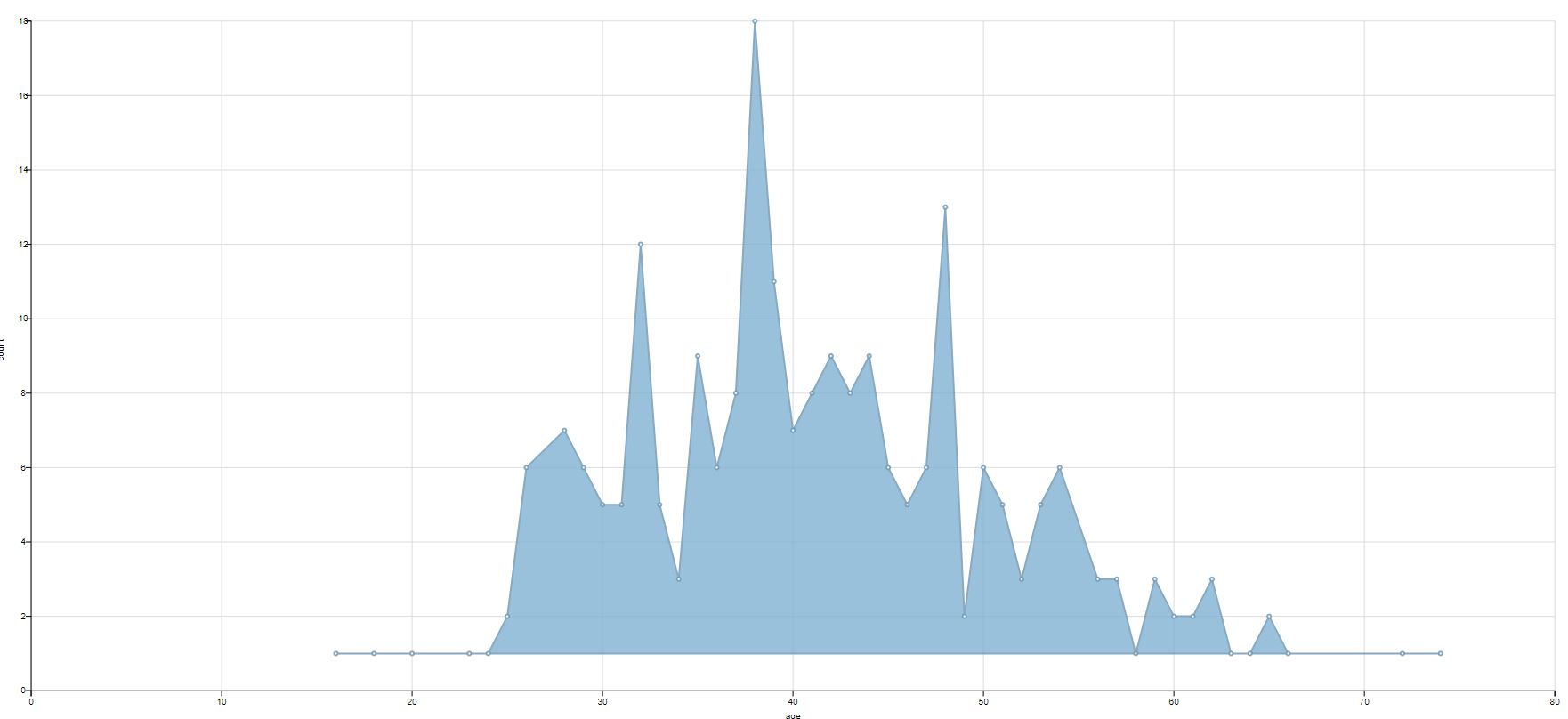
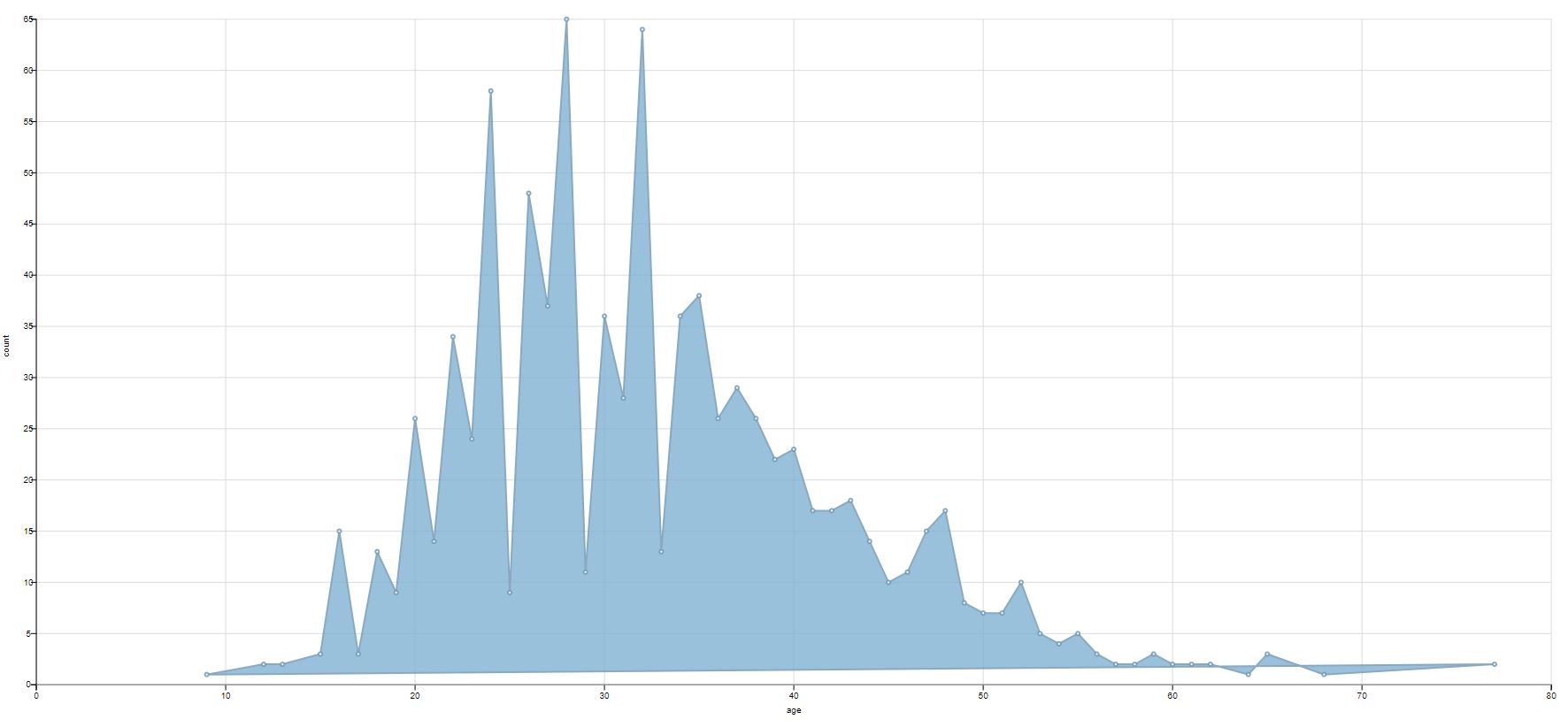
Age profile of the Strict Observance in 1782
Age profile of the Illuminati in 1782
      • The age profile is extremely interesting to evaluate organizations. The pattern has, if given by year of birth, its coincidental ups and downs; a moving average or a distribution by decades would straighten that; but it gives an idea of the outreach of the respective organisation. The Strict Observance was an organization for advanced Freemasons, for men between 35 and 65. The Illuminati wanted to educate and form their members; they were particularly eager to recruit students, and this is clearly visible in their far younger profile with its first peaks in the late 20s. Both graphs state the situations for the year 1782:

    The biggest problem with data as we have them now is that the further categorization is lagging behind. It would be easy to give the medieval three estates of church, nobility and peasants – the 1780s are, however, no longer the era for such a simple pattern. Academics had gained a distinction; the nobility called for a far clearer differentiation between the ruling princes and lower ranks of all sorts. A huge group of citizens had grown over last 500 years and called for complex patterns. We would need social historians to categorize our the biographical datasets – no trivial task in a database that bridges through the centuries.

    Designed to accumulate and aggregate data

    The main advantage of the present data set is that it is now extremely open. You can download the set with any arrangement of statements you are interested in, as far as these statements are made on persons in the set – and here FactGrid has a wealth of unprecedented information on many of the members. All data are CC0, that is free to be used in any other environment, whether you want to publish such a list in book form or whether you want to run visualizations in software-environments of your choice.

    The far more interesting use will be online and in the database. FactGrid is distributing accounts; the data sets presented with this post are open to be augmented and aggregated into any direction. One would love to have lists like these for all the masonic organizations that competed on the late 18th century market. It would be extremely interesting to understand the membership careers, the biographical movements on the constantly changing landscape of competing or well-connected associations.